
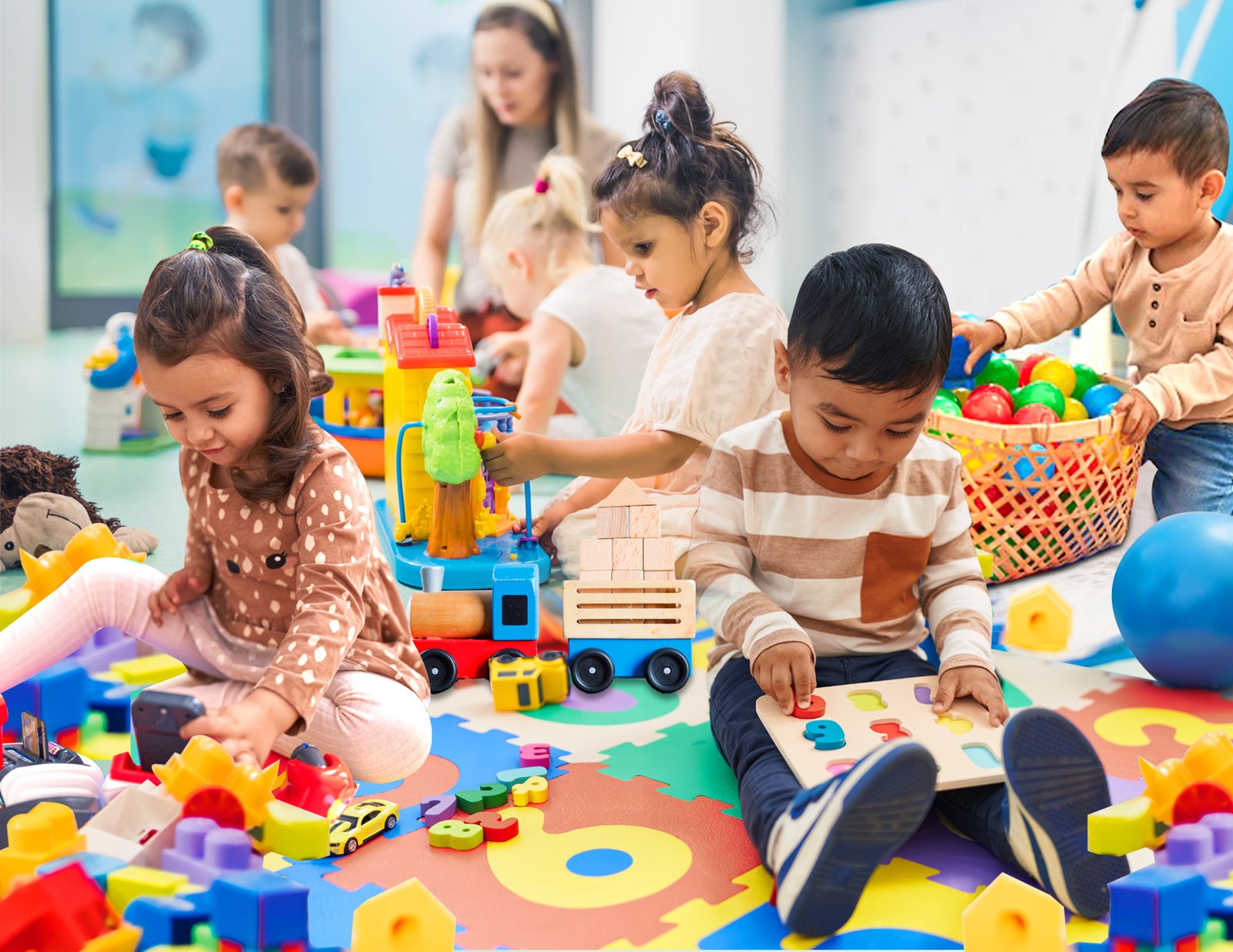
Developing Motor Skills: Why Preschool Playtime Matters
One fine morning, I was observing children playing on the preschool playground. While all other children were busy running, climbing, jumping and laughing, there was one little boy who stood quietly aside. He seemed confused and stood stiff tightly holding the railing, not sure about how to climb the stairs. The teacher instead of forcing him to move, waited and quietly looked at him with a smile on her face. After a few minutes, he lifted his leg and carefully started climbing the stairs. His face was lit with a confident smile as he looked back at the teacher. I still remember that moment.
Being a mother of a preschool child, I often keep thinking about how every step, every jump, scribble, and grip lays the foundation for a child’s physical, psychological and emotional wellbeing.
As pointed out by Einstein, ‘Play is the highest form of research’ during early childhood period. It provides opportunities not only for strengthening muscles but also develops overall coordination and movements. Through play, children move, touch, explore and make sense of their environment. Not only this, play stimulates imagination by offering opportunities to role play and bring into existence that which is abstract in child’s life.
As pointed out by Einstein, ‘Play is the highest form of research’ during early childhood period. It provides opportunities not only for strengthening muscles but also develops overall coordination and movements. Through play, children move, touch, explore and make sense of their environment. Not only this, play stimulates imagination by offering opportunities to role play and bring into existence that which is abstract in child’s life.
This blog explains why the development of motor skills matters during the preschool period, the different types of motor skills, how playtime supports their development, and provides a few tips for parents and teachers to support motor skill development during the preschool years.
What Are Motor Skills and Why Do They Matter in Early Childhood?
Soul Science is the study of the soul—an immaterial, intangible essence believed to be the core of every living being. Across cultures and philosophies, the soul is often seen as immortal, existing beyond the physical body and material world. While science traditionally focuses on the observable and measurable, soul science invites us to consider consciousness, self-awareness, and the mysteries of existence. In this context, the soul is not just a religious or philosophical concept but a subject of holistic exploration.
This is my observation as a parent. When children are able to move around independently and with ease, they feel confident. They approach learning with ‘I am able to do it’ mindset.
Pause & Predict:
If a child faces difficulty in performing daily physical tasks, what will happen to the child’s confidence?
Types of Motor Skills Preschoolers Need to Develop
Preschoolers spend most of their time in play and exploring their environment. Two major types are motor skills are naturally developed through play:
Gross Motor Skills |
Fine Motor Skills |
|---|---|
| They develop first during early childhood. | They develop after gross motor skills. |
| Gross motor skills involve large muscle movements of the body, such as using arms, legs, and core muscles. | They involve small muscle movements, especially of the hands, fingers, and wrists. |
| They allow us to perform movements such as running, jumping, climbing, balancing, and throwing. | They allow us to perform precise actions such as holding a pencil, buttoning clothes, cutting with scissors, drawing, and eating independently. |
| They help to build strength, coordination, balance, and overall body control. | They help to build control, coordination, eye-hand coordination, and accuracy. |
| Responsible for maintaining posture and movement. | Responsible for body stability and detailed tasks. |
| Example: A child passing a tunnel by crawling and walking on a balance beam. | Example: A child threading beads and arranging pegs on a pegboard. |
Fine: They develop after gross motor skills.
Fine: They involve small muscle movements of the hands, fingers, and wrists.
Fine: Holding pencils, buttoning clothes, cutting, drawing, and eating independently.
Fine: Builds control, eye-hand coordination, and accuracy.
Fine: Responsible for body stability and detailed tasks.
Fine: Threading beads and arranging pegs.
Why Playtime Is Essential for Preschool Motor Skills
Jean Piaget once said, “Play is the business of childhood”. All the children like to play. It is the most natural way in which children practice different body movements. There is no pressure or fear of failure associated with performance during play. While playing, several movements are repeated over and over again, improving muscle memory and thereby strengthening muscle co-ordination.
Then and Now – A Reality Check!
- A few decades back preschoolers spent hours in outdoor play like running, climbing trees, cycling, and group games. Children were not exposed to screens.
- Today many children spend long hours indoors watching screens. Sedentary lifestyles are replacing physical and outdoor activities.
- Studies show 20–25% of urban preschool children face early vision issues, with more children using spectacles at a young age.
- National surveys indicate 3–5% of children aged 3–6 are overweight, often linked to low activity and junk food consumption.
Think & Reflect:
How is your child’s play and involvement in outdoor activities different from your own childhood?
Encourages Exploration and Movement
Play offers children the freedom as well as choice to explore, move and discover their physical abilities naturally. In a preschool setting, children climb the ladder, hop from one circle to other, crawl through a tunnel during free play. They learn several movements through trial and error. Through every successive attempt, their muscles become strong, there is improvement in balance and coordination, and this helps in well-coordinated body movements. These preschool activities are not forced. Children willingly participate through play, and these activities occur joyfully in a non-threatening environment. Gradually, they help develop agility, balance, and strength.
-
Supports Cognitive and Sensory Development
Activities like sand play, water play, sensory play, blocks, mazes, puzzles support cognitive and sensory development. They lead to better eye hand coordination, spatial thinking and problem-solving.
-
Strengthens Social and Emotional Skills
Preschoolers get the opportunity to engage in group play during indoor and outdoor activities, circle time, learning centres. From these activities they learn how to share and interact positively with others.
These activities help to develop sharing, cooperation, turn-taking and communication skills. Participation in physical group activities like passing a ball or following movement games, helps to build confidence, develops a sense of belonging and supports emotional regulation.
Benefits of Strong Motor Skills in Preschool Years
Strong motor skills go beyond physical development. They influence how children learn, prepare for school, manage emotions, and become independent. When children develop better control over their movements, they are more confident and ready to participate actively and succeed in everyday preschool experiences.
-
Improved Early Learning Preparedness
When fine motor skills are well developed, children can hold pencils with ease, draw simple shapes, colour neatly, and begin early writing activities with confidence. This makes early literacy and numeracy tasks more comfortable and enjoyable rather than tiring.Gross motor skills are equally important, as they support good posture and body stability. Children with better control over their large muscles can sit upright during circle time, remain comfortable during lessons, and manage their movements effectively. As a result, they are better able to concentrate, follow instructions, and take part actively in classroom activities.
-
Boosted Self-Confidence
As children learn to manage physical tasks on their own—such as climbing steps without support, solving a puzzle, or handling scissors with control—they feel a strong sense of accomplishment. These everyday achievements help children see themselves as capable and independent.
Gradually, this feeling of success nurtures healthy self-esteem. Children who feel confident in their abilities are more open to trying new experiences, facing challenges positively, and expressing themselves with ease during both playtime and learning activities.
-
Better Physical Health and Co-ordination
Consistent movement and active play support a child’s overall physical well-being. Through activities like running, jumping, balancing, and climbing, children build muscle strength, improve posture, enhance flexibility, and maintain healthy energy levels. These experiences also help children become more aware of how their bodies move and respond.
Children who are physically active develop greater stamina and control over their movements, encouraging an active and healthy lifestyle from an early age. This physical fitness often reflects in better moods, improved sleep patterns, and higher levels of attention and involvement during daily activities.
Playtime Activities That Help Develop Motor Skills
There is no need to invest in expensive toys or special equipment for developing motor skills. Simple and everyday play activities are enough to develop motor skills in preschoolers. Both parents and teachers need to think differently and turn daily life activities into something meaningful and add movement to them.
For example, at home, parents can involve children in kitchen activities when they roll and shape dough, sort kitchen items, help to pour water, arrange dishes, peal green peas. This helps to strengthen a child’s hand and finger muscles while encouraging independence.
In preschool, children are engaged in activities like free play, outdoor play, building blocks, obstacle race, art and craft activities and movement games during circle time. These activities require the children to play, move around, explore and practice control over their bodies in a joyful and natural way.
Activities for Fine Motor Skill Development
-
Drawing
When children draw using crayons or pencils, they practice controlled hand movements that build finger strength and support early writing skills
-
Colouring
Colouring helps children develop a steady grip and better hand control as they move their fingers carefully within shapes
-
Threading Beads
Stringing beads encourages precise finger movements and improves coordination between the hands and eyes
-
Clay Moulding
Pressing, rolling, and shaping clay works the small muscles of the hands, making fingers stronger and more flexible
-
Paper Tearing
Tearing paper using fingertips strengthens hand muscles and teaches children how to manage controlled force
-
Sorting Objects
Handling and grouping small items improves finger dexterity and helps children coordinate their movements
-
Using Tongs to Pick Up Items
Gripping and lifting objects with tongs builds the pincer grasp needed for holding pencils and tools
-
Puzzle Play
Placing puzzle pieces correctly supports finger strength, coordination, and early problem-solving skills in a fun way
Activities for Gross Motor Skill Development
-
Running Games
Games that involve running, such as chase or simple races, help children strengthen their leg muscles, increases endurance, and improves overall coordination
-
Obstacle Courses
Moving through tunnels, stepping over objects, and jumping during obstacle play supports muscle strength, balance, and whole-body coordination
-
Hopscotch
Jumping from one square to another encourages balance, leg strength, and better control of body movements
-
Jumping on Soft Mats
Repeated jumping and safe landing on mats help build strong muscles. It teaches children how to manage their body movements confidently
-
Climbing Playground Equipment
Climbing steps, ladders, or frames strengthens the arms, legs, and core while improving coordination and body awareness
-
Dancing
Dancing to music allows children to move freely, improving flexibility, rhythm, and full-body coordination in an enjoyable way
-
Ball Throwing and Catching
Tossing and catching balls helps develop hand–eye coordination, timing, and upper-body strength
-
Balancing on Beams
Walking or standing on balance beams supports core strength and helps children develop stability and control
These build strength, coordination, and balance joyfully
Role of Teachers and Parents in Motor Skills Development
Teachers and parents play a vital role in supporting the development of children’s motor skills by providing a balanced mix of structured and unstructured play experiences. Through guided activities and free movement opportunities, they help children build strength, coordination, and confidence in their physical abilities
-
Encourage Free Play and Outdoor Time
Free play and outdoor time are essential for healthy motor development and can be effectively supported by both parents and teachers. In free play, children choose their own activities and explore at their own pace, while adults provide safe spaces and simple, open-ended materials at home or in the classroom. Outdoor time offers regular opportunities for active movement in open areas such as playgrounds or parks, where children can run, climb, jump, cycle, and play with balls or sand. Together, these experiences build independence, creativity, strength, balance, coordination, endurance, and confidence, supporting the natural development of both fine and gross motor skills.
-
Provide a Safe and Stimulating Environment
A safe and stimulating environment is a space where children can explore and play without danger. It can be set up at home or in school, and parents and teachers must ensure safety by supervising play and checking that materials are in good condition
In this environment, items like building blocks improve hand strength and coordination, crayons develop grip and fine motor control, child-safe scissors enhance cutting skills and hand-eye coordination, sensory trays (sand, water, rice) support finger movements, and puzzle boards strengthen dexterity and problem-solving. These materials make learning active and fun while supporting motor development
-
Offer Gentle Guidance Without Over-Controlling
When we think back of our own preschool days, many of us remember a world where every activity was closely guided by adults, and strict rules or punishments were often the norm. But today, the way we support young learners has changed—and for the better. Instead of controlling every step, teachers and parents now focus on gently guiding children while giving them the freedom to explore and learn on their own
This modern approach means encouraging children to try new tasks without rushing them or taking over. It takes patience, and it works best when adults offer positive reinforcement, such as praising effort and celebrating small achievements. For example, a parent might show a child how to hold scissors safely and then step back to let them practice independently. Similarly, a teacher may guide a child on balancing on a beam, staying close only to support if needed. This gentle support helps children build confidence, independence, and motor skills naturally—turning learning into a joyful and empowering experience.
Long-Term Impact of Strong Motor Skills
Development of motor skills in preschool is not just about learning to hold a pencil using a tripod grip or climbing stairs. It lays the foundation for many other life skills. Strong motor skills developed early in life have a lasting impact throughout a person’s life
-
Success in Sports
When preschoolers engage in activities like running, jumping, and balancing, their movements become more coordinated and they develop greater confidence in physical activities. As they grow, this foundation helps them excel in sports
-
Better Handwriting
Repeated practice of fine motor skills like cutting, colouring, and threading strengthens the small muscles in the hands, making it easier for children to write. This helps them develop neat and controlled handwriting
-
Improved Emotional Regulation
When preschoolers successfully complete motor tasks, they feel confident. This reduces frustration, builds independence, and helps them handle challenges calmly. For example, a child who learns to cut paper using scissors and finishes the task without help feels proud and becomes more willing to try new activities with confidence
-
Overall Health and Fitness
Children who enjoy movement are more likely to stay healthy, build stamina, and maintain good physical fitness later in life, as regular physical activity also supports a healthy metabolism and overall body function. For example, a preschooler who enjoys playing tag or jumping rope during playtime naturally builds stamina and loves being active. As they grow older, this habit of regular movement helps them stay fit and keeps them energetic throughout the day
-
Foundation for Academic Readiness and Life Skills
Strong motor control helps children follow classroom routines, sit comfortably, hold pencils properly and participate in activities independently. For example, a child who sits steadily during circle time and uses scissors or crayons with control is more attentive in the class, completes tasks independently, and feels confident. These skills not only support academic learning but also build independence and readiness for everyday life
Conclusion: The Way Ahead
As a mother, this journey has taught me one thing clearly—preschool playtime matters, and it matters a lot. It is not just about fun; it is the foundation of lifelong health, confidence, learning, and success
What can we do going forward?
-
Set clear screen-time limits and encourage active, hands-on play instead
-
Make outdoor play a daily habit, even if it is just 20–30 minutes
-
Choose purposeful play activities like building blocks, puzzles, and obstacle courses that strengthen motor skills
-
Encourage free play without taking control or rushing the child
-
Offer gentle guidance and praise every effort, not just results
-
Create a safe and stimulating environment with age-appropriate materials and tools
-
Be role models—move, play, and stay active alongside children
-
Promote healthy eating habits and reduce junk food
Preschool playtime is not just about fun. It is the foundation of lifelong health, confidence, and learning. When we prioritise purposeful play in preschool, we give children the best start in life. I would love to hear your thoughts—please keep posting your ideas and experiences on this topic.
