
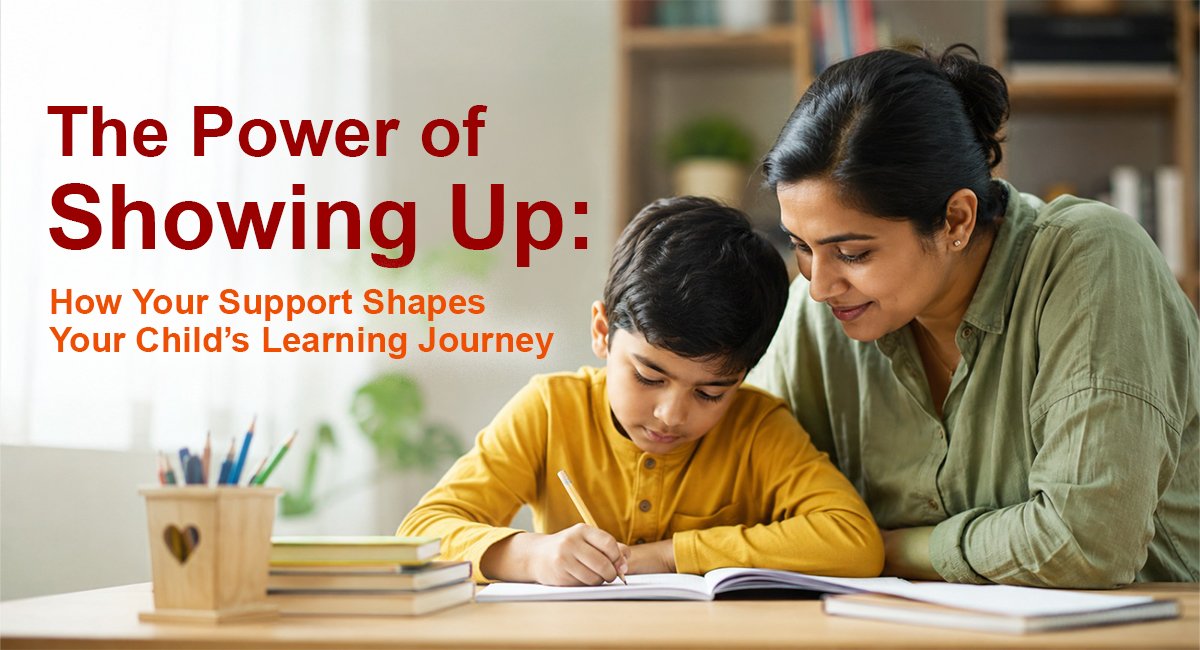
The Power of Showing Up: How Your Support Shapes Your Child’s Learning Journey
There are moments in parenting that quietly stay with us forever — not because they are extraordinary, but because they remind us what children truly need most: our presence, attention, and love.
As a working mother balancing an eight-hour corporate job, I often hear my preschooler softly say, “Mumma, please stay at home with me.” While I gently explain that work calls me to the office, children have their own beautiful ways of expressing love
During his summer vacation, he started waking up at 6.30 a.m. every morning just to play cricket with me before my workday began. With his little cricket bat in hand, he would happily wake me up saying, “Wake up Mumma, let’s play cricket,” and then start singing his favourite cricket song. As a mother, I was balancing work and family, while my little one quietly adjusted his routine just to spend more time with me. It was a simple yet heartwarming reminder of how children often adjust their routines around ours, finding joy not in grand gestures, but in spending quality time together.
That made me realise something important — showing up for children is not only about attending school events or meetings. It is about being emotionally present. It is about listening to their stories, laughing with them, encouraging them, and making them feel loved and valued.
Simple everyday interactions often become the foundation of a child’s emotional security and attitude toward learning. In this article, let us explore how meaningful parent involvement and emotional presence can leave a lasting impact on a child’s growth and future
Why Parent Involvement Matters in a Child’s Education
Children may not remember every gift or outing, but they often remember the comfort, attention, and love they experienced with their parents. When parents stay involved in a child’s learning journey, children feel secure, confident, and motivated to learn. Parent involvement is not about hours of worksheets or constant correction. Small everyday moments like listening to children, appreciating their efforts, reading together, or spending uninterrupted time with them often create the biggest impact.
Take the example of Aarav, a shy preschooler who hardly spoke during class discussions. His teacher noticed that he loved storytelling but lacked confidence. His parents started a simple bedtime routine where they listened to him narrate stories every night without interrupting or correcting him. Slowly, Aarav became more expressive, started participating in class, and developed confidence in speaking
Similarly, many children perform better academically when they know their parents are interested in their learning.
Emotional support also helps children handle challenges better. When children know they can make mistakes without fear of criticism, they become more willing to try new things, solve problems, and learn independently.
With hectic schedules and daily responsibilities, many parents worry about not spending enough time with their children. However, children value emotional connection far more than perfect parenting.
Building Confidence Through Encouragement
Encouragement helps children feel confident, motivated, and willing to learn. When they are very young, motivation is often linked to tangible rewards such as chocolates, stickers, toys, or favourite activities. As they grow older, emotional rewards like praise, appreciation, and recognition become even more meaningful. Motivation works best when linked to achievable targets.
For example:-
“If you complete your reading practice regularly, we will go cycling together”
-
“If you achieve your target percentage, we will buy the bicycle you have been dreaming about”
What matters most is consistency. When parents promise encouragement or rewards, children develop trust and motivation.
For younger children, goals should be small and immediate:-
Finishing homework
-
Keeping toys back
-
Weekly study targets
-
Monthly reading goals
-
Practice schedules for hobbies
-
“I am proud of your effort”
-
“You tried so well”
-
“I liked how confidently you answered”
This kind of parent engagement in learning helps children associate education with positivity rather than fear.
Creating a Positive Learning Environment at Home
A positive learning environment at home is a space where children feel safe, supported, encouraged, and motivated to learn without fear or pressure. It is not about having expensive study materials or strict rules. It is about creating routines, emotional security, and a calm atmosphere where children can grow with confidence.
Children learn best in homes where they feel emotionally secure, supported, and free to explore learning without fear of criticism. Simple habits such as fixed study timings, regular sleep routines, reading together, limiting distractions during learning time, and appreciating effort can make a big difference in a child’s emotional and academic growth.
| Positive Home Environment | Negative Home Environment |
|---|---|
| Calm and supportive atmosphere | Frequent stress, shouting, or tension |
| Encourages questions and curiosity | Fear of making mistakes |
| Fixed routines and consistency | Irregular schedules and lack of structure |
| Appreciation of effort and progress | Constant criticism or comparison |
| Limited distractions during study time | Excessive screen time and interruptions |
| Open communication and emotional support | Lack of attention or emotional connection |
Marks may fade with time, but children often remember the people who stood beside them during important moments
Small Actions make a big difference
Parent involvement is often reflected in small everyday moments. Helping children get ready for school, listening to their stories during breakfast, or making a quick video call from the office can make them feel loved and emotionally secure
Simple routines like having meals together, helping with homework, reading bedtime stories, playing after work, or attending school events create lasting memories for children. Though simple, these everyday actions strongly influence a child’s emotional growth and sense of security.
Being Present During Important Moments
Important moments in a child’s life are not limited to academics alone. They can be academic, non-academic, or emotional moments where children need support, encouragement, and reassurance from their parents
Moments
Academic Moments
-
Encouraging practice and preparation at home
-
Attending school performances and events
-
Appreciating effort, not only results
-
Helping children manage exam stress and anxiety
-
Communicating positively with teachers
Non-Academic Moments
-
Visiting relatives and attending family gatherings
-
Going on outings and spending time outdoors
-
Encouraging friendships and social interactions
-
Playing games and sharing hobbies together
-
Celebrating festivals and traditions as a family
Emotional Moments
Children especially need their parents when they feel emotionally low, sad, disappointed, anxious, left out, or confused. During such moments, parents can support children by:
-
Listening patiently without judgement
-
Allowing children to express emotions freely
-
Spending quality time together
-
Encouraging open conversations
-
Reassuring and motivating them gently
-
Helping them rebuild confidence after failure
A beautiful example of this is Anaya, a student who was once removed from a school group dance performance because she was not performing well. She felt hurt and lost confidence in herself. Instead of criticising her, her mother encouraged and supported her emotionally. She enrolled Anaya in dance classes and motivated her to keep practising. Over time, Anaya’s confidence and skills improved greatly. Today, she not only performs confidently but also runs her own performing arts academy.
How Parent Engagement Shapes Long-Term Learning Habits
Consistent parent engagement plays a major role in shaping a child’s long-term learning habits. When parents actively participate in their child’s education, children gradually develop discipline, curiosity, independence, and strong problem-solving skills.
A good example of the impact of parent engagement can be seen in Rohan’s journey from Grade 5th to Grade 10. In Grade 5, Rohan was an average student scoring around 65–70%. He often got distracted while studying and lacked confidence in difficult subjects. Instead of pressuring him for marks, his parents focused on building healthy learning habits. They created a regular study routine, encouraged daily reading and revision, discussed school learning with him, and motivated him to think independently while solving problems.
Over time, these consistent efforts helped Rohan become more disciplined, confident, and independent in his studies. By Grade 7, he had developed better concentration, time-management, and self-study habits. As he progressed to higher grades, he became more organised and confident in handling academics and exams. By Grade 10, his strong study habits and consistent efforts helped him score 95% in his board examinations. His journey highlights how positive parent involvement can gradually shape lifelong learning habits and academic success.
Encouraging Open Communication
Children develop emotional security when they feel heard, understood, and comfortable expressing their thoughts to their parents. Listening patiently and responding calmly helps build trust and confidence.
I remember when my six-year-old suddenly refused to go to school because another child had frightened him with a story-based threat. After gently speaking to him, I understood his fear. The next day, I accompanied him to school and calmly discussed the matter with the other child’s mother. She explained the misunderstanding to both children, reassured my son, and soon they became good friends again
This experience showed me how patient listening and calm reassurance can help children feel emotionally secure and understood
How Parents Can Build Responsibility at Different Stages
At this age, responsibility should feel simple, enjoyable, and encouraging
-
Asking children to put toys back after playtime
-
Encouraging them to place shoes properly
-
Giving small tasks like watering plants or arranging books
-
Helping them pack their snack box for school
-
Appreciating efforts with simple words like, “You did that so well!”
Example:
“If you finish putting your blocks back, we can read your favourite story together”
Children at this stage can begin managing small routines independently
-
Packing their school bag according to the timetable
-
Completing homework before playtime
-
Following fixed reading or study routines
-
Keeping their study table organised
-
Taking responsibility for school projects and practice work
Example:
“Let us check your timetable together first, and then you try packing your bag on your own”
At this stage, children should gradually learn self-discipline and decision-making
-
Creating weekly study schedules
-
Managing assignment deadlines
-
Balancing screen time and study time
-
Preparing independently for exams
-
Taking ownership of hobbies, practice sessions, and responsibilities
Example:
“You have football practice and a science test this week. How would you like to plan your time?”
When parents guide children patiently instead of constantly controlling them, children slowly develop confidence, discipline, and accountability in both studies and daily life.
Supporting Emotional Well-Being Alongside Academics
A child’s overall well-being depends not only on academic performance, but also on emotional health and support. Sometimes children simply need our presence. E.g. a gentle pat on the back, a hug, listening quietly, sitting beside them during difficult moments. These small actions provide emotional security.
Parents should:-
Listen patiently
-
Discuss difficult topics openly
-
Avoid dismissing emotions
-
Encourage emotional expression
-
Help children identify feelings
-
Reassure them during failures
-
Avoid constant comparison
Example:
“If you finish putting your blocks back, we can read your favourite story together”
The Importance of Parent-School Collaboration
Children learn better when parents and teachers work together. Strong communication creates consistency between home and school expectations. Schools encourage collaboration through:
-
PTA meetings
-
Parent interaction sessions
-
Open houses
-
Teacher meeting days
These meetings are opportunities to discuss the child’s overall growth, not only complaints. Parent-school collaboration helps in:
-
Academic progress
-
Behavioural development
-
Emotional well-being
-
Classroom participation
-
Social skills
-
Learning difficulties
-
Discipline and study habits
Teachers understand classroom behaviour, while parents understand home behaviour
Combined support helps identify concerns early and guide children better
Positive parent-teacher communication makes children feel secure, confident, and emotionally supported
Conclusion
While academic lessons may fade over time, children often carry memories of the love, encouragement, and support they received from their parents. The role of parents in education is not about being perfect. It is about being emotionally present, supportive, and consistent. Simple gestures such as listening, encouraging, and spending meaningful time together can influence a child’s emotional and learning growth for years..
Every parenting journey is unique, and every small effort matters. Do share your experiences and moments that have strengthened your bond with your child.
