
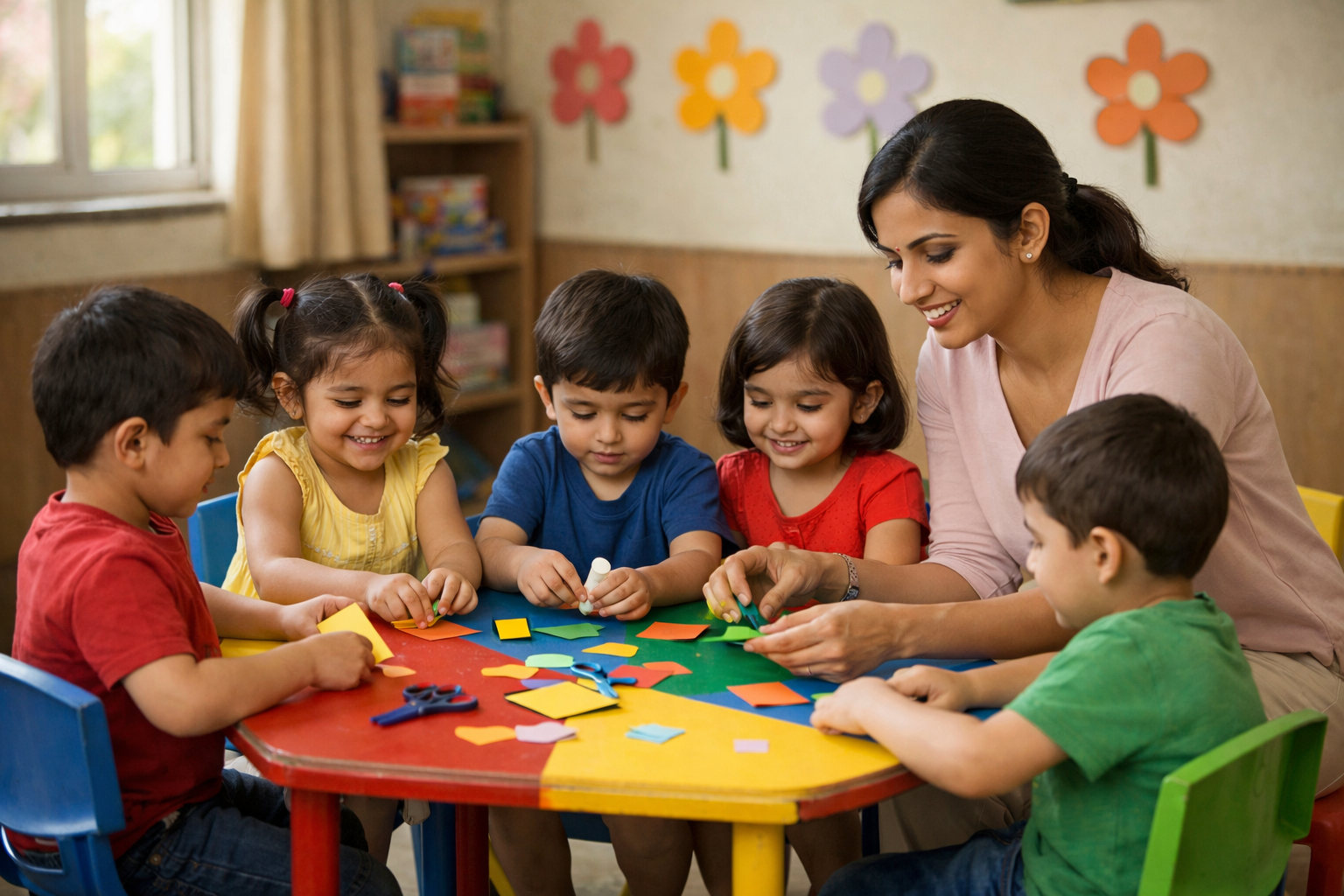
What Parents Look for Before Enrolling in a Preschool
Has your child ever watched you leave the room a little too closely, hesitated at a new doorway, or taken a moment longer to settle in or taken a little time to settle when left with a relative or caregiver?
Moments like these often make parents pause and wonder—is my child ready for preschool? Preschool admission is often the first big educational decision parents make, and it brings with it a mix of excitement, questions, and quiet anxiety
Choosing a preschool is not only about academics; it is about finding an environment where children feel secure, valued, and encouraged to grow socially, emotionally, and cognitively
The best preschool for children is one that nurtures these foundations while respecting each child’s individuality
This guide helps parents understand what truly matters when choosing a preschool, so they can make an informed and confident decision
Understanding Your Child’s Early Learning Needs
Every child develops at their own pace, which is why preschool admission should begin with understanding your child rather than comparing schools immediately
A child who can focus deeply on stacking blocks may struggle to sit still for a story—and that’s okay. Learning doesn’t always look the same. Understanding these learning preferences helps parents choose a preschool that aligns with their child’s needs.
Parents should reflect on:
-
Their child’s age readiness and comfort with short separations
-
Social exposure with other children and adults
-
Energy levels, curiosity, and attention span
-
Whether the child learns better through movement, play, or observation
Some children adapt quickly to new environments, while others need time and reassurance. A good preschool respects these differences and supports children gently as they transition into structured group settings.
Preschool Curriculum and Learning Approach
The preschool curriculum is one of the most important factors to evaluate because it shapes how children experience learning in their early years. When learning is right, children don’t say “I studied today”—they say “I played, I made, I discovered.” That simple change in language reveals how deeply the right learning approach can shape a child’s experience
A strong curriculum focuses on:
-
Their child’s age readiness and comfort with short separations
-
Learning through play and exploration
-
Foundational language and number concepts
-
Creative expression through art, music, and storytelling
-
Life skills such as sharing, listening, and independence
Many preschools follow approaches like Montessori, play-based, or activity-based learning. Instead of getting caught up in terminology, parents should focus on outcomes—Is my child engaged, confident, and enjoying the learning process?
Balance Between Play and Structured Learning
At the preschool stage, excessive focus on worksheets and rote academics can be counterproductive. Young children learn best when they move, explore, ask questions, and play.
Parents can identify age-appropriate learning by observing:
-
Hands-on activities instead of long desk-based tasks
-
Learning through games, stories, songs, and role play
-
Short, guided activities balanced with free play
-
A healthy balance ensures children build curiosity without pressure
-
Focus on Holistic Development
A good preschool curriculum supports all areas of development:
-
Emotional: expressing feelings, building confidence
-
Social: group play, turn-taking, communication
-
Physical: movement, fine motor activities
-
Cognitive: problem-solving, pattern recognition
Activities like storytelling, music and movement, group games, and simple puzzles help children grow holistically rather than academically alone
Preschool Teacher Qualifications and Staff Quality
Teachers play a defining role in a child’s preschool experience. Strong preschool teacher qualifications ensure children are guided with sensitivity, understanding, and expertise
Parents should look for:
-
Training in early childhood education
-
Experience working with young children
-
Ability to communicate calmly and clearly
-
Patience, warmth, and attentiveness
A qualified and caring teacher can make a child feel safe, heard, and motivated to learn
Teacher-to-Child Ratio
Smaller class sizes allow teachers to give individual attention and respond to children’s emotional needs
An appropriate teacher-to-child ratio helps with:
-
Better supervision and safety
-
Stronger emotional bonding
-
Early identification of learning or adjustment needs
Lower ratios create a calmer and more supportive classroom environment
Interaction and Teaching Style
During school visits, parents should observe:
-
How teachers speak to children
-
Whether discipline is handled gently and respectfully
-
How participation is encouraged without pressure
Positive teacher-child interactions are strong indicators of a nurturing preschool
Preschool Safety Standards and Child Security
For parents, preschool safety standards are non-negotiable. A safe environment allows children to explore confidently while giving parents peace of mind.
Safety measures should cover daily routines as well as unexpected situations
Campus Safety and Hygiene Practices
Parents should check for:
-
Secure entry and exit points
-
Clean, well-maintained classrooms
-
Sanitized washrooms
-
Safe, age-appropriate play equipment
-
Supervision in all activity areas
A clean and secure campus reflects the school’s commitment to child well-being
Emergency and Health Protocols
Parents can ask about:
-
Availability of first-aid kits
-
Staff trained to handle minor injuries or illness
-
Clear procedures for contacting parents
-
Emergency preparedness plans
Transparency in health and safety protocols builds trust
Preschool Infrastructure and Learning Environment
Thoughtfully designed preschool infrastructure supports comfort, safety, and learning
Infrastructure is not about luxury—it’s about functionality and child-friendliness
Classroom Setup and Learning Resources
Inside classrooms, parents should look for:
-
Bright, welcoming spaces
-
Child-sized furniture
-
Learning corners for art, reading, and play
-
Materials that children can access independently
A well-organized classroom encourages curiosity and independence
Outdoor and Play Facilities
Outdoor play is essential for physical development and emotional regulation
Parents should check:
-
Clean and safe play areas
-
Soft flooring or safe surfaces
-
Age-appropriate equipment
-
Active supervision during playtime
Outdoor spaces should invite movement while ensuring safety
School Reputation, Reviews, and Parent Feedback
Reputation and word-of-mouth play a significant role in preschool admission decisions
Parents can:
-
Speak to existing parents
-
Read reviews with a balanced perspective
-
Look for consistent feedback rather than isolated opinions
While marketing messages can be attractive, real experiences provide deeper insight
Location, Accessibility, and Daily Convenience
A preschool’s location affects daily routines more than parents often expect
Consider:
-
Distance from home
-
Travel time and traffic
-
School timings
-
Transport facilities (if available)
While quality should never be compromised, convenience supports consistency and reduces stress for both parents and children
Preschool Admission Process and Transparency
A smooth and transparent preschool admission process reflects a school’s professionalism and parent-first approach
Parents should expect:
-
Clear guidance during inquiries
-
Transparent documentation requirements
-
Honest communication about policies
-
Fee Structure and Value for Money
Instead of focusing only on cost, parents should evaluate fees based on:
-
Curriculum quality
-
Teacher expertise
-
Safety standards
-
Infrastructure and learning resources
True value lies in the overall experience offered to the child
Trial Classes and School Visits
Visiting a preschool allows parents to experience the environment beyond descriptions. Observing classroom energy, child engagement, and staff interactions provides clarity that no brochure can offer
Trial classes, where available, can further help parents understand how their child responds to the setting
Communication with Parents
Regular communication builds strong parent-school partnerships
Parents should look for:
-
Updates on classroom activities
-
Parent-teacher meetings
-
Clear channels for feedback and concerns
-
Open communication ensures alignment and trust
How to Shortlist the Best Preschool for Children
Parents can simplify the decision by creating a checklist that includes:
-
Child comfort and happiness
-
Curriculum balance
-
Teacher quality
-
Safety and hygiene
-
Infrastructure and accessibility
The best preschool for children is not defined by brand name alone but by how well it aligns with a child’s needs and family values
Final Thoughts for Parents
Choosing a preschool is not about finding the “perfect” school—it’s about finding the right place for your child. The clues are often already there, in your child’s everyday behaviour, comfort, and curiosity.
By asking the right questions, visiting schools, and trusting both research and intuition, parents can make confident decisions that support their child’s early learning journey. A nurturing preschool lays the foundation not just for academics, but for lifelong confidence, curiosity, and joy in learning.
