
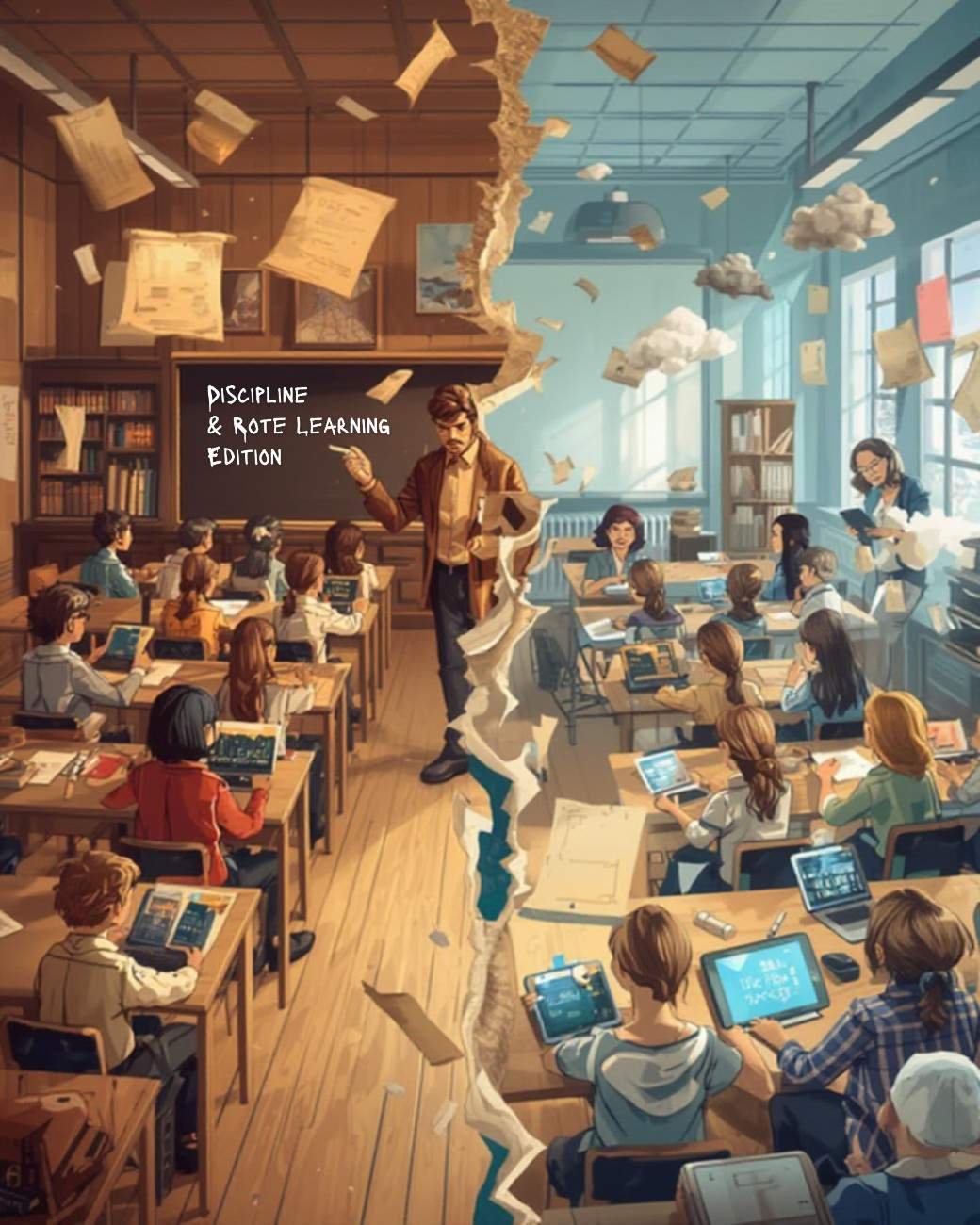
Difference Between K12 Education and Traditional Schooling Models
Education Industry has metamorphosed into a positive transformation in recent years, with K12education schools emerging as a dynamic alternative to traditional schooling methods. Instead of being bound by rigid schedules, students now have opportunities to learn in child friendly learning spaces with child centricity as the core. As technology reshapes how we access knowledge, families are also becoming aware of the benefits of enrolling in K12 versus the conventional route of traditional schools.
Overview of the Traditional Education System
Traditional education refers to the conventional way of teaching and learning such as chalk and talk and lecture method that has been established and practiced for centuries. It is a form of education that typically takes place in a physical classroom setting with a teacher taking the centre stage and giving verbal instruction to a group of students without any activity or collaboration This method of education has been the primary mode of learning for generations and has laid the foundation for modern educational practices.
Advantages
1. Face-to-Face Interaction: Traditional education allows for direct interaction between students and teachers, promoting student teacher engagement.
2. Structured Learning Environment: The structured nature of traditional education provides a clear framework for learning with teacher taking the centre stage as always, making it easier for students to follow along and stay on track.
3. Social Development: Traditional education encourages social interaction among students, helping them develop important social skills and relationships as they help each other.
4. Established Pedagogy: Traditional education is based on established pedagogical practices that have been refined over time, ensuring a high-quality learning experience.
Challenges
1. One-Size-Fits-All Journey: Traditional education often follows a fixed framework of curriculum that may not cater to the individual learning needs and styles of all students.
2. Teacher-Centered Learning: The teacher takes the centre stage and teacher -centric nature of traditional education can challenge the student learning, conceptual understanding and creativity with desired skill development.
3. Technological Advancements: The usage of technology is minimal when teacher takes the centre stage and the learning becomes boring and dull especially with complex topics.
4. Diversity and Inclusion: Traditional education may face challenges in meeting the diverse needs of students from different backgrounds, abilities, and learning styles.
What Is the Modern K12 Learning Model
Modern K12 education is fragmented into Kindergarten, Primary Years, Middle Years, Secondary and Senior Secondary Schooling, however with the invent of NEP the structure is now Foundational(5 years), Preparatory (3 years), Middle(3 years) and Secondary (4 years) With such levels the vertical and horizontal progression of subject and grade level topics are taken into account along with VARK learning styles of teaching strategies accounting to flexibility of learning thereby reflecting conceptual clarity and joy of learning amongst the students.
Learning Approach and Methodology
Structure and Methodology
In the traditional education system, students are habituated to the memorization and rote learning pedagogy with hardly any conceptual clarity. The important ones are repetition; knowledge transfer through lecture methods. Oral and written testing are core in this case. It is a form of passive learning of major concepts and rote education. Whereas the K12 The modern educational syntax focusses on 21st century skills required in today's changing world. It emphasizes conceptualization, versatility, innovation, and digital competence. It goes beyond traditional textbooks, making the learning process more engaging and flexible for learners.
Curriculum Design and Flexibility
Traditional education revolves around textual knowledge in its curriculum especially the theoretical subjects. Learners are evaluated using standardized testing such as pen and paper irrespective of the learning styles. The students learn only through one source that is his/her teacher and do not enjoy the learning much. Modern education provides flexible curriculum as per VARK and MI approach. It includes teaching real-world applications of skills through project-based learning, experiential learning internships, and collaboration with businesses. They prepare students for modern-day challenges while nurturing innovation at its core. As a result, the curriculum is changed more regularly to meet the talent demand of the current industry.
Student Engagement and Participation
In traditional method the student engagement is minimal or only few set of students participate as per the choice of the teacher or as per the interest of the individual students , the students are mainly following the outlines curriculum and do not go beyond it Whereas in Modern k12 schools, the curriculum has a broader spectrum with gamut of teaching strategies to suit the need and demands of the learners, this enables them to witness the application of the learning in the daily lives with high decision making skills that gets developed too.
Assessment and Evaluation
Explain how traditional systems rely on exams, marks, and end-term assessments. Contrast this with continuous evaluation practices in K12 education such as skill-based assessments, practical projects, classroom activities, and formative feedback.
Use of Technology in Learning
Traditional methods include pen and paper type of assessments and that too with a structure assessment framework, where obtaining marks has more focus.
Where a in K12 modern schools, assessments are a platter of tools such as debates, essay writing, MCQs, portfolios, orals, aural, projects, case studies, internships and many more, it give students a choice of assessing themselves as per their learning styles.
Focus on Skill Development
The traditional education system prioritizes academic scores over skill development. Contrast this with the K12 model’s focus on communication skills, creativity, problem-solving, teamwork, leadership, and emotional intelligence. The traditional system of learning does not pay much attention to the skills, whereas the modern schools pivot is skill development through knowledge transfer and application of concepts in daily life. The traditional education system prioritizes academic scores over skill development. Contrast this with the K12 model’s focus on communication skills, creativity, problem-solving, teamwork, leadership, and emotional intelligence. The traditional system of learning does not pay much attention to the skills, whereas the modern schools pivot is skill development through knowledge transfer and application of concepts in daily life.
Teacher Roles and Teaching Style
Teachers in traditional education mostly deliver lectures and follow fixed lesson plans. Compare this with the K12 model, where teachers act as mentors and facilitators who guide students through self-paced and exploratory learning, teachers follow a rigid curriculum and hardly has any flexibility to play around the curriculum. This makes it less adaptable to individual learning styles or contemporary challenges
Whereas in K12 modern schools the teachers have the freedom to chose the learning styles that suit the learner needs, and teach the topic with varied available teaching strategies in the classroom making teaching fun and full of joy.
Why Schools Are Shifting Toward Modern K12 Learning
The ongoing transformation in the education sector, explaining why schools are gradually adopting the K12 learning model. This is because of the tech integration in each subject with age appropriateness, classrooms are now equipped with smart boards, teachers are trained and are getting used to teaching complex topics through technology with a data driven approach. Schools infuse teaching through project based learning, design thinking and Kolb’s experiential learning techniques.
Gamification of learning has brought into a sense of joy amongst students, encourages healthy competition, goal achievement and student participation.
Which Model Is Better for Today’s Students
A thorough blended approach with teacher and student centricity and a perfect balance between traditional and modern K12 schools bring out the best in a child and hones her/his potential at a large
Conclusion
The 21st century has opened avenues for teachers ,schools and students, marked by innovation, flexibility, and a far-fetched growth on holistic development. As schools continue to evolve, embracing modern approaches to learning will be essential in preparing students for the future. By fostering critical thinking, creativity, and digital literacy, these changes are not just enhancing academic performance but also equipping learners with the skills they need to thrive in an ever-changing world. The future of education is bright, dynamic, and full of possibilities, driven by a commitment to excellence and equity for all learners.
