
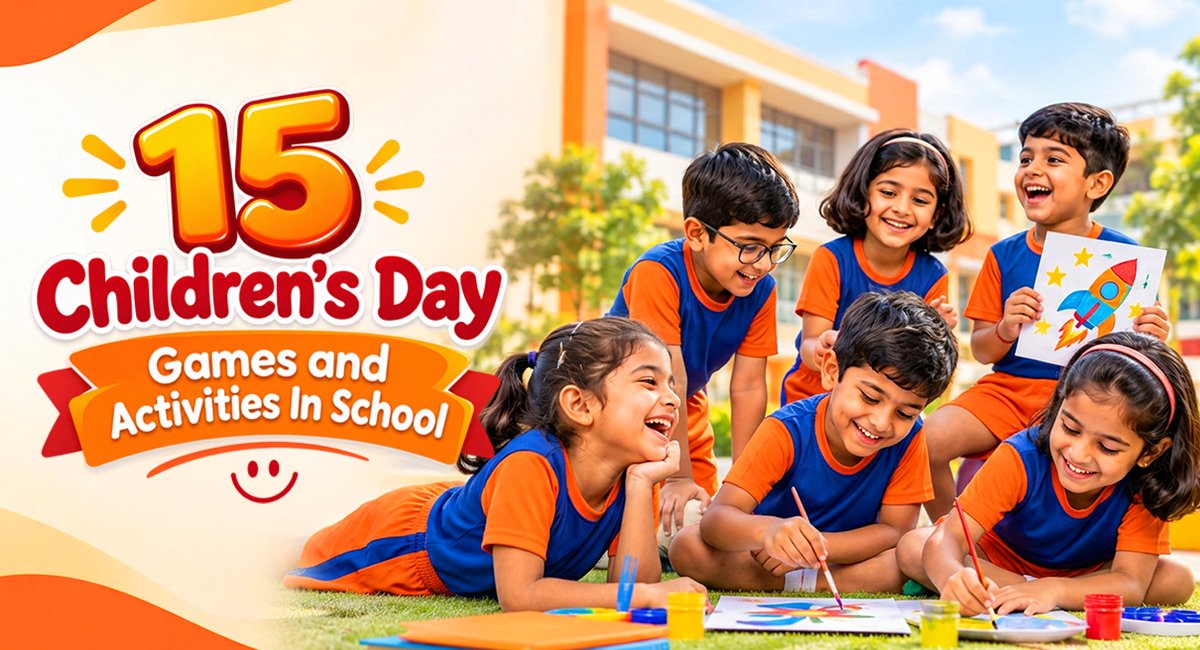
Every child brings a world of curiosity, imagination, and possibilities.
15 Children’s Day Games and Activities in School
“The children of today will make the India of tomorrow.” — Pandit Jawaharlal Nehru
Every child brings a world of curiosity, imagination and possibilities. Children’s Day is a celebration of this wonderful spirit of childhood and an opportunity for schools to create joyful experiences where children can explore their interests, express themselves freely and make lasting memories through play and learning.
Children’s Day is a celebration of childhood, recognising the happiness, imagination and unique potential of every child. In India, it is observed on 14th November each year to mark the birth anniversary of Pandit Jawaharlal Nehru, India’s first Prime Minister. Popularly remembered as Chacha Nehru, he had a deep affection for children and emphasised the importance of their education and well-being. The day serves as a reminder that every child deserves love, care, encouragement and opportunities to learn and grow, helping them build a bright and promising future.
Why Celebrate Children’s Day Through Games and Activities?
Thinking back to our school days, many of us fondly remember special assemblies, cultural programmes, cheerful games and little surprises that made Children’s Day memorable. I fondly remember the laughter shared with friends and the excitement of participating in fun activities that made the day feel different from a regular school day.
While celebrations may have evolved over the years, the joy of childhood remains unchanged. Children’s Day is an opportunity for schools to recreate that excitement through engaging games and hands-on activities that encourage creativity, physical movement, teamwork and active participation. Rather than simply watching a programme, children get to explore, interact with their peers and express themselves.
This blog brings you 15 fun and easy-to-organise Children’s Day activities for preschool and primary students, using simple, readily available resources. These ideas help teachers create a joyful celebration where children can discover their abilities, strengthen friendships and make happy school memories.
15 Children’s Day Games and Activities in School
Glow and Pose Photo Corner
Set up a photo corner in a dimly lit area with glow sticks, neon-coloured props and fun accessories. Invite children to pose individually or with their friends and capture fun, memorable moments. Ensure the area has sufficient lighting for safe movement and adult supervision.
Story Sparks: An Interactive Storytelling Adventure
Gather children in a circle and begin an engaging story with interesting characters and situations. Invite them to make sounds, imitate character actions, answer simple questions and suggest what might happen next. Older children can take turns adding a sentence to create their own group story.
Freeze and Pose Dance
Play lively, age-appropriate music and encourage children to dance freely. Pause the music at intervals and ask them to freeze like statues. Add fun prompts such as ‘freeze like a superhero’, ‘pose like a flamingo’ or ‘stand like a tree’.
Paper Plane Flight Challenge
Guide children to fold paper planes and decorate them with their own designs. Mark a safe flying zone and let children launch their planes one at a time. Encourage them to observe which designs fly farther and try making simple adjustments.
Buddy Cheer Relay
Pair the children and position them at opposite ends of the track. One child runs to the center to exchange a high-five with their buddy, who then runs to the finish line. Alternatively, children can pass a ball to their buddy at the center, who carries it to the finish line and places it in a basket. These fun challenges encourage active participation and teamwork.
Draw and Guess Challenge
Divide children into small teams. Give one child a simple word or picture prompt, such as a sun, ball, tree, school bus or favourite animal. The child draws it on a board while teammates guess the answer. Use picture prompts for younger children and written words for older students.
School-Time Treasure Trail
Hide child-friendly objects around the classroom or play area. Provide picture clues, simple riddles or hints related to school supplies, toys, colours or familiar classroom objects. Let children search individually or in small teams, adapting the clues to their age group.
Little Adventurers’ Obstacle Trail
Create a safe obstacle course using cones, hoops, floor markers and soft cushions. Invite children to walk around cones, step through hoops, follow a zigzag path or crawl through a safe tunnel. Adjust the course to suit different ages and abilities, focusing on participation rather than speed.
Build It Together Challenge
Divide children into small groups and provide building blocks, paper cups or cardboard pieces. Challenge each group to build a tower, bridge or creative structure that stands independently. Encourage children to share ideas, take turns and work together to solve problems.
Surprise Parcel Fun
Gather children in a circle and play cheerful music as they pass a parcel from one child to another. When the music stops, the child holding the parcel picks a fun task, such as singing a line of a favourite song, performing a funny action or sharing a favourite school memory. Continue the game, giving children opportunities to participate and enjoy the excitement together.
Make-and-Take Craft Studio
Invite children to create simple activities, such as a paper crown, colourful bookmark, greeting card or paper flower. Demonstrate the basic steps and allow children to personalise their creations with colours, patterns and decorations.
One School, One Giant Masterpiece
Spread a large sheet of paper across a designated floor or table area. Give each child a section to draw something that makes them happy. Connect the sections into one giant mural representing the children’s ideas and imagination.
Board Game Bonanza
Arrange different board games at separate tables, such as Ludo, Snakes and Ladders, carrom or age-appropriate matching games. Divide children into small groups and allow them to rotate between tables. Teachers can guide younger children through the rules and encourage fair play and turn-taking.
Little Chefs: No-Fire Cooking
Invite children to prepare a simple, no-fire snack such as a fruit salad, vegetable sandwich or biscuit topping creation. Provide pre-cut ingredients and let children assemble their snacks, explore different flavours and present their creations. Ensure handwashing, check for food allergies and supervise children throughout the activity.
Mini Talent Showcase
Invite children to take 1–2 minutes to showcase a talent such as singing, dancing, performing a simple magic trick, storytelling or recitation. Encourage classmates to cheer for every participant. Participation should be voluntary, with opportunities for children to support the show through props or applause.
Tips for Planning Children’s Day Activities in Preschool
- Choose Age-Appropriate Activities: Select activities that are age-appropriate and suit children’s developmental levels.
- Prepare Materials in Advance: Arrange all resources beforehand for smooth activity sessions.
- Keep Activities Short and Engaging: Plan activities for 5–10 minutes, depending on children’s interest and attention span.
- Balance Active and Quiet Activities: Alternate movement games with calmer activities like storytelling and colouring.
- Ensure Safety and Inclusion: Use child-safe materials, supervise closely and accommodate individual needs.
- Encourage Participation, Not Competition: Appreciate every child’s effort without comparisons or pressure to perform.
- Plan Smooth Transitions: Give clear instructions and allow enough time between activities.
- Allow Children to Make Choices: Let children choose activities, colours, materials or roles where possible.
- Keep the Celebration Flexible: Adapt activities according to children’s interest and needs.
- End with a Happy Moment: Conclude with a group song, appreciation circle or display of children’s creations.
- Capture and Celebrate Memories: Display artwork or capture special moments with appropriate school permissions.
How These Activities Support Children’s Development?
Children’s Day activities make learning enjoyable while supporting children’s overall development. Creative tasks nurture imagination and fine motor skills, movement games improve coordination, and storytelling strengthens communication and concentration. Group challenges encourage teamwork and problem-solving, while talent showcases build confidence and self-expression. Discover more on how gamification transforms learning and why integrating playful challenges fosters lifelong social, emotional, and cognitive growth.
Conclusion
A memorable Children’s Day celebration combines fun, active participation and meaningful learning. By offering a mix of creative, physical and team-based activities, schools can ensure that children with different interests and abilities enjoy the celebration, build friendships and create happy memories.
