
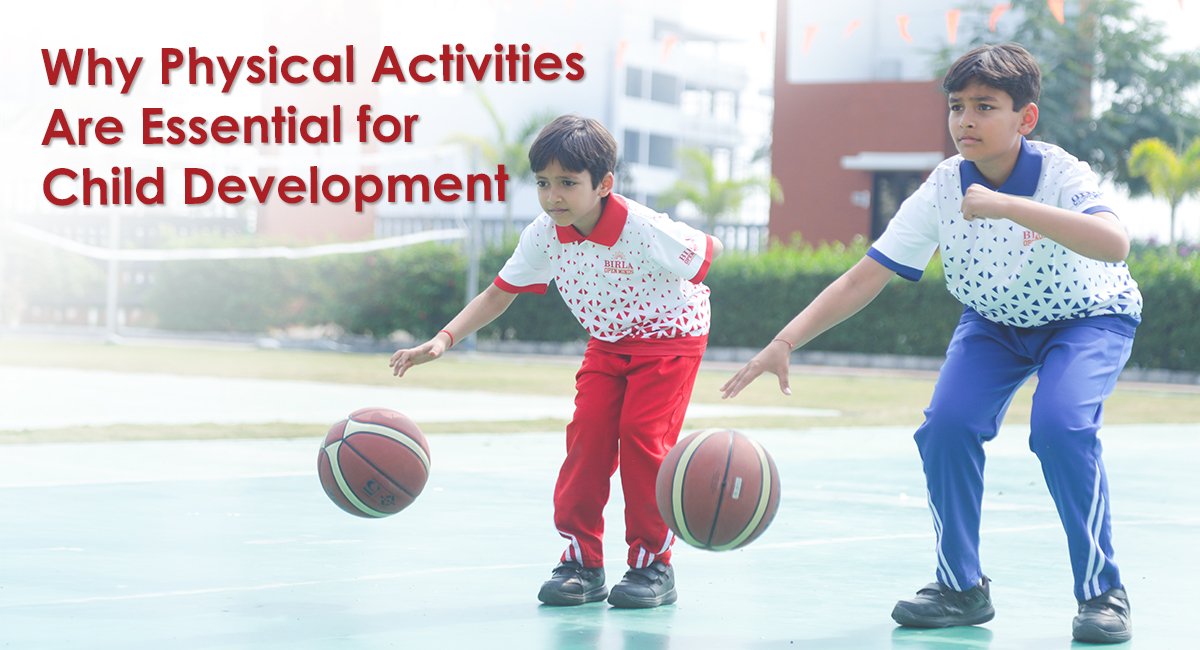
Why Physical Activities Are Essential for Child Development
Movement is one of the most powerful forces in a child's life. Long before a child reads their first word or solves their first equation, they are learning through motion — crawling, climbing, running, and playing their way into understanding the world. Physical activities for child development go far beyond keeping children healthy and fit. They shape how children think, feel, connect with others, and build the confidence they carry into adulthood.
And yet, despite everything we know about movement, children today are moving less than any previous generation. In an age of tablets, streaming, and online classes, we face a crisis hiding in plain sight. This article explores the science- backed reasons why physical activity must be at the heart of every child's day — and what happens when it isn't.
80%
of adolescents globally do not meet the WHO's recommended 60 minutes of daily physical activity
- World Health Organization, 2024
The Importance of Physical Activity for Children in Early Years
The early years of childhood — from infancy through the primary school years — are a period of explosive growth. Bones are hardening, muscles are strengthening, and neural pathways are forming at an astonishing rate. The importance of physical activity for children during this critical window simply cannot be overstated.
Real-life scenario: Riya, age 4
Riya's parents noticed she was unusually shy and struggled to interact with other children at birthday parties. Her nursery teacher suggested enrolling her in a weekly dance and movement class. Within two months, Riya was not only skipping, hopping, and twirling with confidence — she was laughing, making friends, and leading the group. Movement had opened a door that no amount of coaching could.
Regular movement in early childhood builds muscle tone, improves coordination, and supports healthy bone density. It also plays a direct role in brain development — every time a child jumps, balances, or catches a ball, they are simultaneously building physical and cognitive pathways that will serve them for life.
Today, with increasing screen exposure and more sedentary lifestyles, intentional physical activity is more essential than ever. According to the 2024 US Report Card on Physical Activity for Children and Youth, the overall physical activity grade for American children remained at a D- — unchanged from 2022. Globally, the picture is equally concerning, with children across 57 countries receiving a D average grade for overall physical activity in the Global Matrix 4.0 report.
D-Grade
Overall physical activity grade for children in the United States — unchanged for two consecutive reporting cycles
- Physical Activity Alliance, 2024 US Report Card
At this stage, the role of the preschool environment becomes equally important. A well-designed preschool not only focuses on academic readiness but also integrates movement, play, and physical exploration into everyday learning. Choosing the right early learning environment can significantly influence how active and engaged a child becomes during these formative years.
How Physical Activities Support Overall Child Growth
Understanding why physical activity is important for child growth means looking at the whole child — not just their muscles, but their posture, cardiovascular system, immune health, and long-term vitality. Consistent movement supports height development, improves balance and coordination, strengthens the heart and lungs, and boosts immune function. Children who are regularly active simply get sick less often and recover faster when they do.
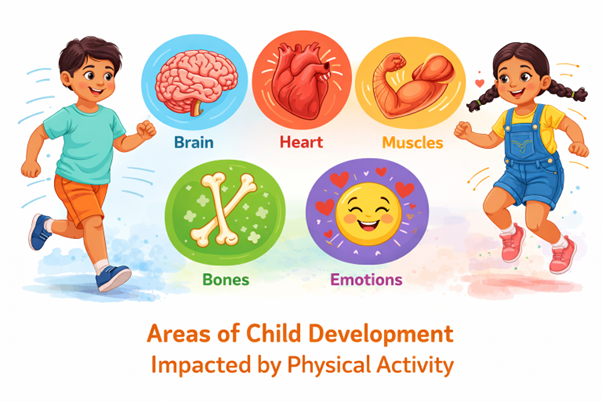
Physical Growth and Motor Skill Development
Running, jumping, climbing, and balancing are not just fun — they are the building blocks of gross motor skill development. These large-movement activities strengthen the core, improve spatial awareness, and develop the muscular coordination that children need for everything from sports to sitting upright at a desk.
Fine motor skills, developed through catching, throwing, and coordination-based games, are equally important. They lay the groundwork for handwriting, using tools, and the detailed physical tasks children encounter throughout their schooling. When children master these motor skills early, they gain a sense of independence and confidence that extends well beyond the playground.
Real-life scenario: Arjun, age 6
Arjun's teacher flagged that he struggled with handwriting — his grip was weak and his letters wobbly. His parents were surprised to learn that the solution wasn't more writing practice, but more outdoor play. After three months of daily climbing, throwing, and catching games, Arjun's fine motor control had improved significantly, and so had his confidence in the classroom.
Brain Development and Cognitive Function
There is a powerful and well-documented link between physical movement and brain function. When children exercise, blood flow to the brain increases significantly, delivering oxygen and nutrients that enhance concentration, memory retention, and problem-solving ability. Physical activity also stimulates the production of Brain- Derived Neurotrophic Factor (BDNF) — a protein that supports the growth of new neural connections.
In practical terms, this means that an active child is better equipped to focus in class, absorb new information, and think creatively. Movement quite literally makes children smarter.
Only 5%
of school time is spent in physical activity in many countries — while nearly two-thirds of the school day is sedentary
- Physical Activity Alliance, 2024 US Report Card
Benefits of Physical Activity in Early Childhood
The benefits of physical activity in early childhood are wide-ranging and deeply interconnected. From emotional resilience to social confidence, movement shapes the whole child. Here are the most important areas of impact:
-
Emotional and Mental Well-Being
Regular physical activity is one of the most effective natural tools for managing childhood stress and anxiety. When children move, their bodies release endorphins — the brain's natural mood elevators. Outdoor play and group games give children a healthy outlet for pent-up energy and difficult emotions, helping them return to learning and social situations calmer and more regulated.
A parent's observation -
"On days my son has football practice, he comes home calm and ready to do his homework. On days he doesn't, there's always a meltdown before dinner. I never connected the two until his paediatrician pointed it out. Now we protect that activity time like it's sacred." — Parent of a 7-year-old
Over time, consistent physical activity builds emotional resilience. Children who are regularly active are better equipped to handle setbacks, manage frustration, and maintain a positive self-image — skills that are just as critical as any academic subject.
-
Social Skills and Teamwork
Much of a child's social education happens not in the classroom, but on the playground. Group play, team sports, and cooperative games teach children to communicate, share, take turns, and navigate conflict — all in a natural, low-stakes environment.
Whether it is learning to pass a ball, cheer for a teammate, or accept a loss graciously, physical play builds the social foundation that children carry into every relationship throughout their lives. It is also a powerful equaliser — on the sports field, every child has a role to play, regardless of academic ability or family background.
-
Discipline and Routine Building
Incorporating regular physical activity into a child's daily schedule does more than keep them fit — it builds the habit of structure itself. Children who follow a consistent routine of movement learn the value of showing up, putting in effort, and working towards a goal. These are lessons in discipline, time management, and personal responsibility that serve them across every area of their lives.
A teacher's perspective -
"I can always tell which students swim or play a sport regularly. They sit differently — more alert, more patient. They handle frustration better. It's not just about fitness. There's a mental toughness that physical training builds, and it shows up in the classroom every single day."
— Primary school teacher, 14 years of experience
Types of Physical Activities for Different Age Groups
Not all physical activities suit all ages. Here is a practical guide to age-appropriate movement for young children:
-
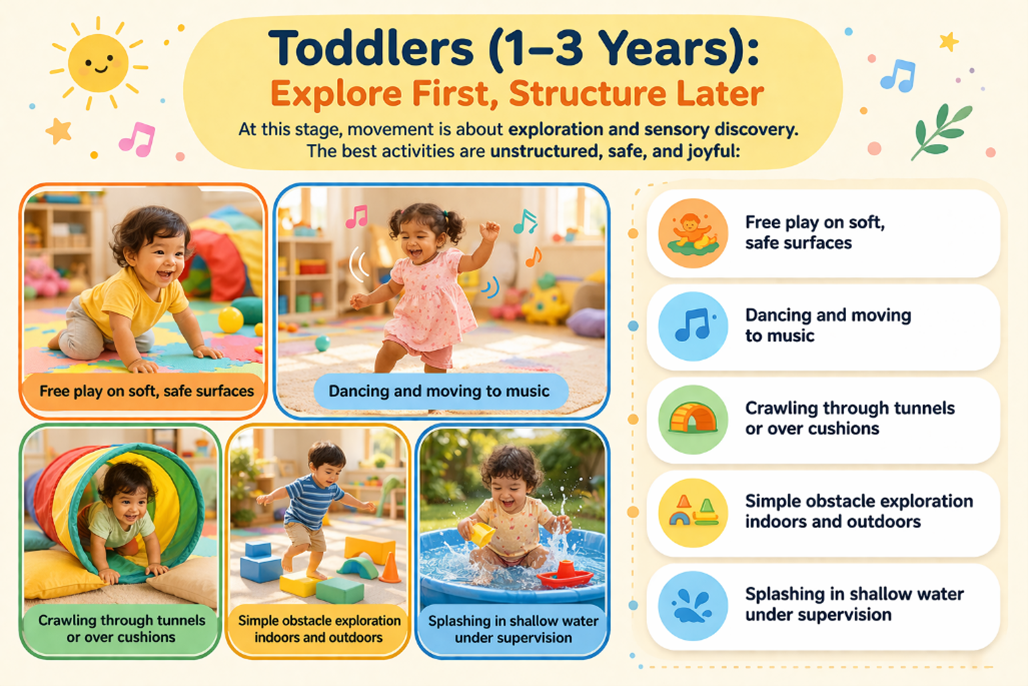
Toddlers (1–3 Years): Explore First, Structure Later
At this stage, movement is about exploration and sensory discovery. The best activities are unstructured, safe, and joyful:
- Free play on soft, safe surfaces
- Dancing and moving to music
- Crawling through tunnels or over cushions
- Simple obstacle exploration indoors and outdoors
- Splashing in shallow water under supervision
-
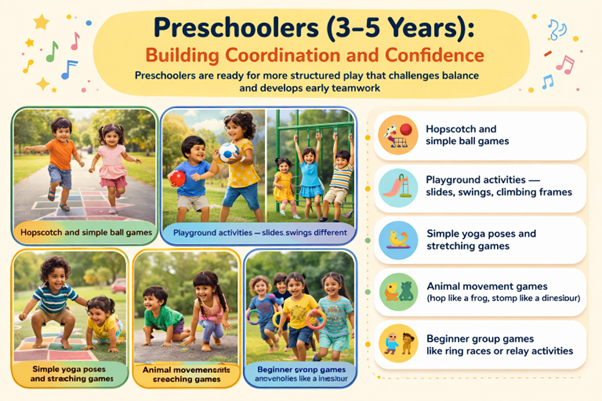
Preschoolers (3–5 Years): Building Coordination and Confidence
Preschoolers are ready for more structured play that challenges balance and develops early teamwork:
- Hopscotch and simple ball games
- Playground activities — slides, swings, climbing frames
- Simple yoga poses and stretching games
- Animal movement games (hop like a frog, stomp like a dinosaur)
- Beginner group games like ring races or relay activities
-
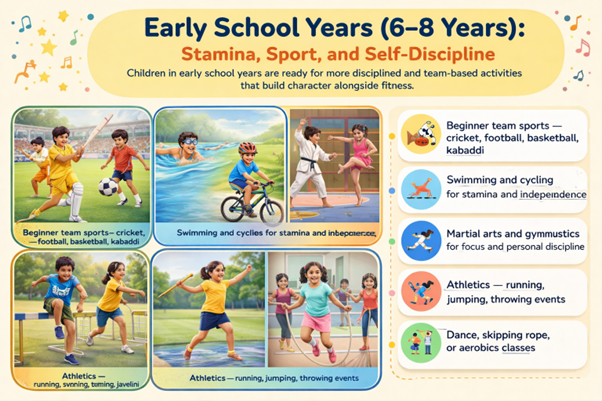
Early School Years (6–8 Years): Stamina, Sport, and Self-Discipline
Children in early school years are ready for more disciplined and team-based activities that build character alongside fitness:
- Beginner team sports — cricket, football, basketball, kabaddi
- Swimming and cycling for stamina and independence
- Martial arts and gymnastics for focus and personal discipline
- Athletics — running, jumping, throwing events
- Dance, skipping rope, or aerobics classes
The Impact of Physical Activity on Academic Performance
One of the most compelling — and frequently overlooked — arguments for physical activity is its direct impact on how children learn. The evidence is consistent and striking: active children perform better academically, show better classroom behaviour, and demonstrate stronger cognitive function than their sedentary peers.
63%
of studies in a major systematic review found physical activity positively improved academic performance in school-age children
- University of Derby Systematic Review, 2023 (PMC10297707)
A landmark study in Sweden increased physical activity for children aged 6–8 from 60 minutes per week to 200 minutes per week (40 minutes daily). Tracked across nine full school years, these children showed meaningfully better academic outcomes at graduation compared to the national control group.
A WHO/Europe review found that increasing physical education time, introducing 'active classrooms', and encouraging regular movement during the school week all contributed to improved academic achievement — without any negative impact on study time or test performance. Physical education is not time taken away from learning. It is an investment in the quality of all learning that follows.
The recess experiment
In a US study, 43 fourth-grade students were randomly assigned to either one or no days of recess. Researchers found that on-task classroom behaviour was consistently better among children who had recess. The finding was simple but powerful: children who move learn better. The body needs to play so the mind can focus.
Along with physical activity, factors such as concentration, attention span, and classroom behaviour play a crucial role in academic success. Developing these skills early can significantly enhance a child’s learning outcomes over time.
Common Barriers to Physical Activity and How to Overcome Them
Despite the clear evidence, many children today are simply not moving enough. In India and across South Asia, rapid urbanisation, academic pressure, shrinking outdoor spaces, and the explosion of screen-based entertainment have made sedentary childhoods the norm rather than the exception.
More than 40% of school-aged children and adolescents in the US have at least one chronic health condition such as asthma or obesity — a figure closely linked to physical inactivity. The barriers are real, but so are the solutions:
- Schedule outdoor time the way you would schedule homework — treat it as non-negotiable
- Replace passive screen time with active alternatives (dance games, yoga videos, movement apps)
- Use indoor spaces creatively — hallways, stairwells, and living rooms can become activity zones
- Make family walks, evening sports, or weekend cycles a shared routine
- Encourage children to walk or cycle to school where safe
- Advocate for more physical education and activity breaks at school
When screens took over
Mehul, age 8, had gone from an energetic child who loved the park to one who spent his evenings glued to a tablet. His parents noticed he was more irritable, sleeping poorly, and struggling to concentrate at school. Their General Practioner recommended a simple intervention: one hour of outdoor play before any screen time. Within three weeks, Mehul's mood, sleep, and focus had noticeably improved. The screen hadn't changed — but the movement had changed everything.
Creating a Balanced Activity Routine for Children
Balance is the key word. Children need a healthy mix of structured sports — which teach discipline and teamwork — and free, unstructured play — which fosters creativity and self-direction. Neither should come at the cost of the other. Equally important is ensuring children get adequate rest and hydration. Overexertion without recovery can lead to fatigue, injury, and a negative association with physical activity. The goal is not to create high-performance athletes — it is to build children who love to move, and who will carry that love into adulthood.
-
Daily target:
At least 60 minutes of moderate to vigorous activity, spread across aerobic, muscle-strengthening, and balance-based movement.
-
Weekly rhythm:
Mix structured sports (2–3 days) with free outdoor play (daily), and ensure at least one full rest or light activity day.
-
Family tip:
Children whose parents model active behaviour are significantly more likely to be active themselves. Your habits are their first curriculum.
When screens took over
Mehul, age 8, had gone from an energetic child who loved the park to one who spent his evenings glued to a tablet. His parents noticed he was more irritable, sleeping poorly, and struggling to concentrate at school. Their General Practioner recommended a simple intervention: one hour of outdoor play before any screen time. Within three weeks, Mehul's mood, sleep, and focus had noticeably improved. The screen hadn't changed — but the movement had changed everything.
Conclusion:
Encouraging Lifelong Healthy Habits
The evidence is clear and compelling: movement is not optional for children — it is foundational. The importance of physical activity for children extends across every dimension of growth, from strong bones and healthy hearts to sharp minds, stable emotions, and confident social skills.
When we invest in physical activities for child development from the earliest years, we are not just building fit children. We are building curious learners, resilient individuals, and well-rounded human beings who are equipped to thrive in school, in relationships, and in life.
The habits formed in childhood become the foundation of lifelong health and well-being. And it all begins with the simple, powerful, irreplaceable act of letting children move.
