
15 Fun Independence Day Activities for Kids
“Swaraj is my birthright, and I shall have it.”
— Bal Gangadhar Tilak
These powerful words remind us of India’s journey towards freedom and the spirit of courage, determination and unity that shaped our nation. Independence Day offers young children an opportunity to experience India’s colours, culture and spirit of togetherness. For preschoolers, the celebration need not involve lengthy speeches or complex historical facts. Children can learn through movement, music, storytelling, role play, sensory experiences and hands-on activities.
This year, India celebrates its 80th Independence Day on 15 August 2026. Here are 15 age-appropriate ideas designed for Learning Years LY1 to LY4, along with activities that can bring the whole preschool community together.
Why Celebrate Independence Day Through Activities?
A child may have seen the Indian flag at school, at the airport, or on television and may recognise flags of different countries. But do they know what our Tricolour represents or why we celebrate Independence Day? For preschoolers, Independence Day is best experienced through simple, meaningful experiences. Songs, movement, stories, crafts and group games help children connect with the Tricolour, learn about India and experience the joy of celebrating together. Children learn best when they see, hear, create and participate. Independence Day activities can help children:
- Recognise the Tricolour and Ashoka Chakra.
- Learn about freedom fighters and national leaders through simple stories.
- Use expressions such as “Jai Hind.”
- Experience unity through songs and group activities.
- Understand that, despite our differences, we all belong to one country—India.
These experiences make Independence Day joyful, meaningful and memorable for young children.
1. Tricolour Disc Sort & Stick

In small groups, provide large, lightweight saffron, white and green discs, three matching trays and colour cards. Children identify, sort and place discs in the correct tray. With teacher-applied glue, children take turns sticking the sorted discs onto a large blank Tricolour displayed in the classroom. Use smooth, rounded discs and supervise children throughout.
What Children Learn: Colour recognition, sorting, fine-motor skills, turn-taking, teamwork and awareness of the Tricolour.
2. Tiranga Crawl-Through Challenge
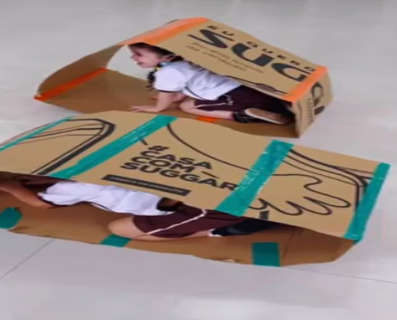
Use large, sturdy, open-ended cardboard boxes, ensuring both ends remain completely open. Play a cheerful patriotic song as children take turns crawling through the tunnel. LY1: Crawl with teacher support. LY2: Crawl independently. LY3: Crawl through and collect a tricolour card. LY4: Crawl through, collect a card and place it in the matching colour basket.
What Children Learn: Gross-motor skills, coordination, body awareness, confidence, independence and joyful participation.
Reference Video: Cardboard Tunnel Activity for Children
3. Little Tricolour March-Past
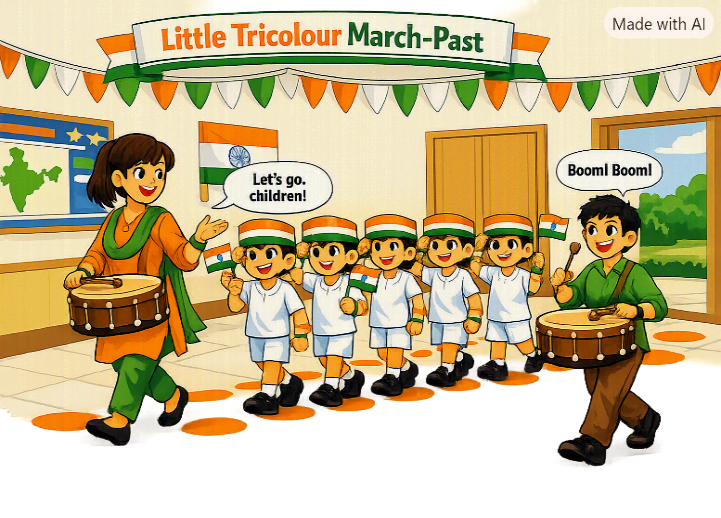
Dress children in simple white outfits with Tricolour wristbands and paper caps. Give each child a small paper flag. Create a clear pathway indoors or outdoors using floor markers. Children walk in a single line behind the teacher as the drum beats. They gently wave their flags while walking. When the drum stops, children pause, raise their small flags respectfully and say “Jai Hind!” Continue for 2–3 rounds.
What Children Learn: Listening skills, rhythm, coordination, following instructions, group participation and awareness of the Tricolour.
4. Little India Museum
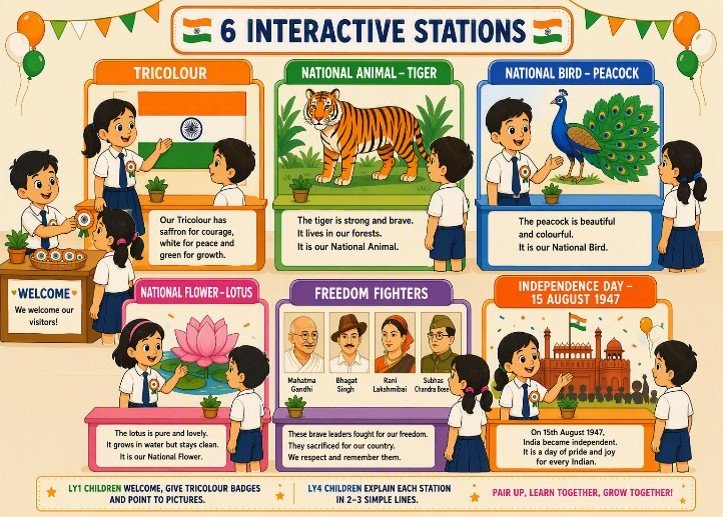
Create six interactive India-themed stations: 1. Tricolour, 2. National Animal–Tiger, 3. National Bird–Peacock, 4. National Flower–Lotus, 5. Freedom Fighters, 6. Independence Day–15 August 1947. LY1 children can greet visitors, wave and point to pictures; LY4 children can share two or three simple facts using picture prompts.
What Children Learn: National symbols, Tricolour, freedom fighters, Independence Day, communication, confidence, teamwork and a sense of belonging to India.
Tips: Practise for 5–7 days. Keep LY1 children seated on cushions when tired. Use picture prompts for LY4 instead of long scripts. Keep displays at children's eye level and ensure wide, safe pathways.
5. Traditional Dress Day – Walk, Freeze & Celebrate India
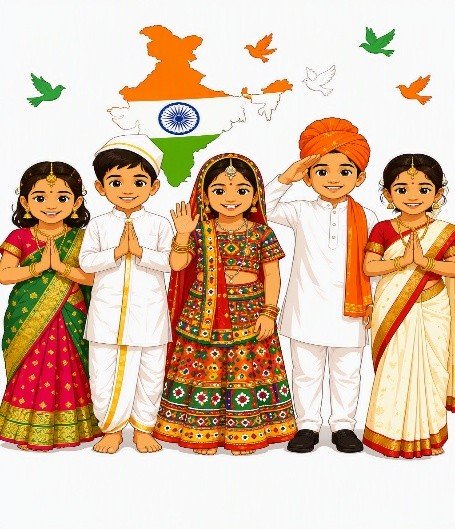
Invite children to wear traditional attire from different regions of India. Play a cheerful patriotic instrumental song as children walk along a marked pathway. When the music stops, children freeze and show a fun action—wave a scarf, twirl, give a “Namaste!” or pose. The teacher briefly introduces the outfit and the region it represents. End with everyone saying, “Many cultures, one India!”
What Children Learn: Cultural awareness, confidence, listening, coordination, movement and a sense of unity.
6. My Little Tricolour Fan
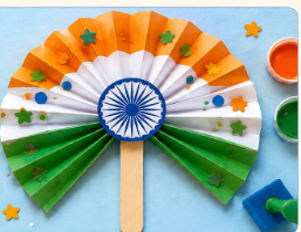
Give each child three pre-cut saffron, white and green paper strips. With teacher guidance, children fold the strips in a simple accordion pattern and join them to create a fan. Add a blue Ashoka Chakra in the centre. Children can decorate their fans with stickers or fingerprints and take them home.
What Children Learn: Colour recognition, folding, fine-motor skills, creativity and awareness of the Tricolour.
Take-home: Children take their colourful fan home as an Independence Day keepsake.
7. Tricolour Sandwich – Build Our Flag!
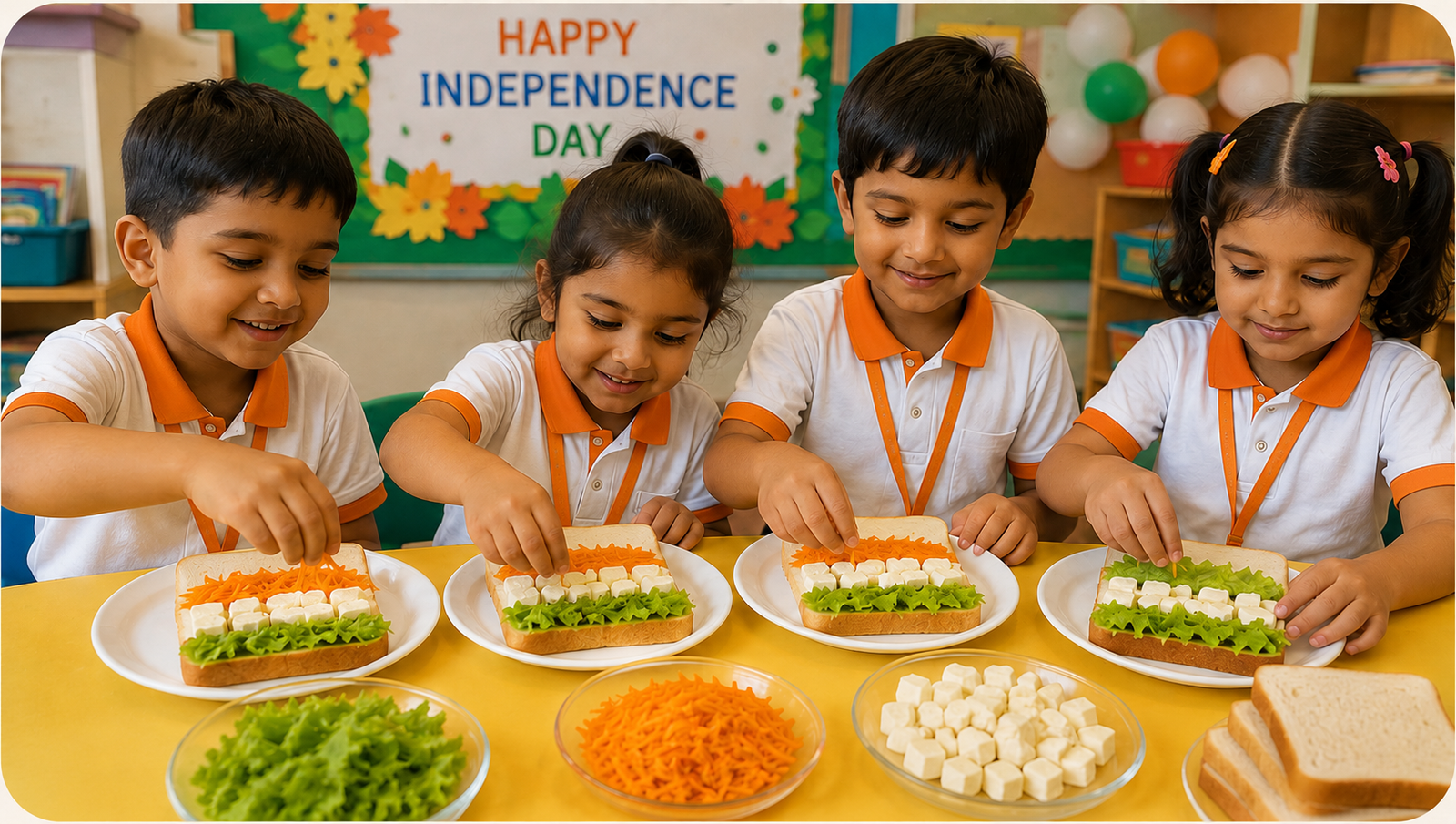
In small groups, provide bread and pre-cut, child-safe foods such as lettuce for green, orange foods such as grated carrot, and paneer or cheese for white. LY1 children can place the ready-to-use ingredients with teacher support, while older children arrange them in three rows. Children proudly enjoy their Tricolour sandwiches together.
What Children Learn: Colour recognition, sequencing, fine-motor skills, healthy eating and awareness of the Tricolour.
Teacher Tip: Check allergies and dietary restrictions. Adults should handle cutting and food preparation. Closely supervise children, especially LY1, throughout the activity.
8. Little Freedom Fighters – Role-Play Parade
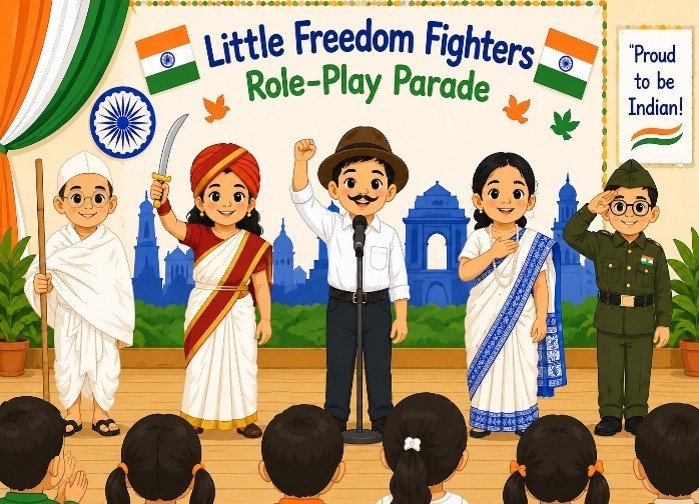
Introduce children to a few freedom fighters through very short, child-friendly stories. Children can choose or be given roles such as Mahatma Gandhi, Rani Lakshmibai, Bhagat Singh, Sarojini Naidu or other historical figures. Instead of memorising long dialogues, each child can say one simple line. Use simple scarves, caps, shawls or handmade props; avoid elaborate costumes. Example: Rani Lakshmibai: “I bravely fought to protect Jhansi.”
Play a short, lively patriotic song as each child walks to the centre/stage. The child pauses, introduces the freedom fighter in one simple line, and then walks back while the music continues.
What Children Learn: Confidence, communication, listening, awareness of freedom fighters, understanding of India’s freedom movement.
9. Thank You Card for the Indian Army
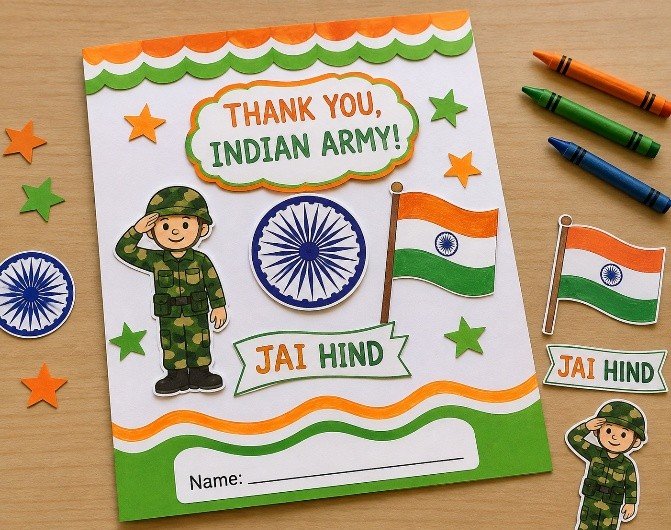
Talk briefly about how the Indian Army helps keep our country safe. Show children a simple card with “Thank You, Indian Army!” and invite them to draw, colour or decorate it with tricolour patterns. Provide cut-outs of an Indian Army soldier, “Jai Hind”, and the Indian Tricolour for children to stick on their cards. Include a blank line for each child to write their name. Play a soft patriotic song while they work. Display the completed cards together as a “Thank You, Indian Army, for Protecting Us!” classroom wall.
What Children Learn: Gratitude, creativity, fine-motor skills, awareness of the Indian Army’s contribution, and respect for those who serve the country.
10. Little Storytellers – India’s Freedom Journey
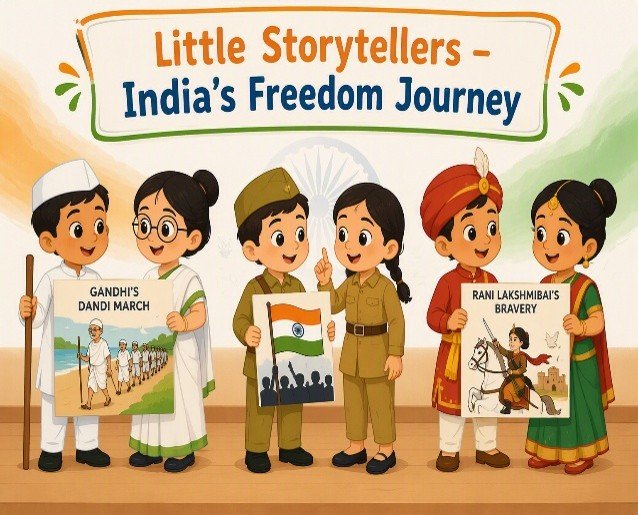
Divide LY4 children into pairs and assign each pair a simple event from India’s freedom movement, such as Gandhi’s Dandi March and Rani Lakshmibai’s bravery. Provide picture cards and simple props to support their narration. Practise 2–3 short, age-appropriate sentences per child beforehand. During the celebration, each pair comes forward, uses the visuals and narrates their part in sequence.
What Children Learn: Builds confidence, memory, sequencing, communication, listening and an age-appropriate awareness of India’s freedom movement.
11. Tricolour Balloon Challenge
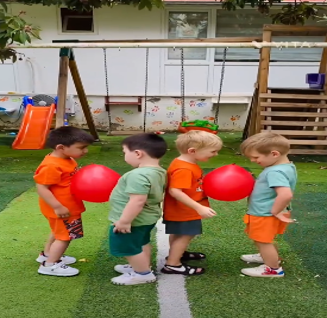
Divide children into pairs and give each pair three balloons—orange, white and green. Children work together to gently hold and squeeze the three balloons between their bodies while walking towards a tub placed at the finish line. Without dropping the balloons, they place all three into the tub to complete their Tiranga Challenge. Encourage pairs to communicate and move carefully together.
What Children Learn: Develops coordination, balance, cooperation, communication, teamwork and motor control. (Note: Instead of red balloons, use green, orange and white balloons)
12. National Symbols Treasure Hunt & Tricolour Hanging
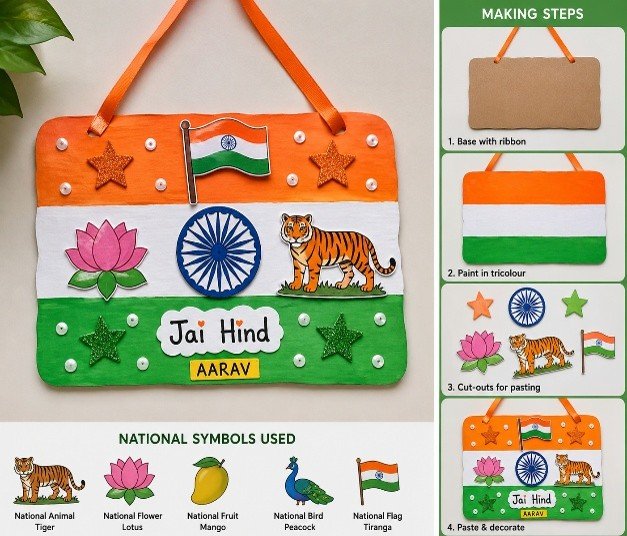
Divide children into pairs according to class strength. Hide picture cards of India’s national symbols and national identity cards —Tiger, Lotus, Mango, Peacock and the Tiranga—around the classroom. Give each pair a simple clue and ask them to find two symbols. Follow the hunt with the My Tricolour Hanging craft.
Give each LY4 child a sturdy cardboard or wooden hanging base with a ribbon attached. Let children paint it in saffron, white and green. Provide cut-outs of orange and green stars, a blue Ashoka Chakra, a small Indian flag, and the national symbol they found during the treasure hunt to paste creatively. Children can add “Jai Hind” and their name with teacher support. Display the finished hangings before taking them home.
What Children Learn: Creativity, fine-motor skills, colour recognition, hand-eye coordination, self-expression, awareness of national symbols, pride in India.
Independence Day Activities for All Learning Years
13. Flag Hoisting Ceremony – Our Tiranga, Our Pride
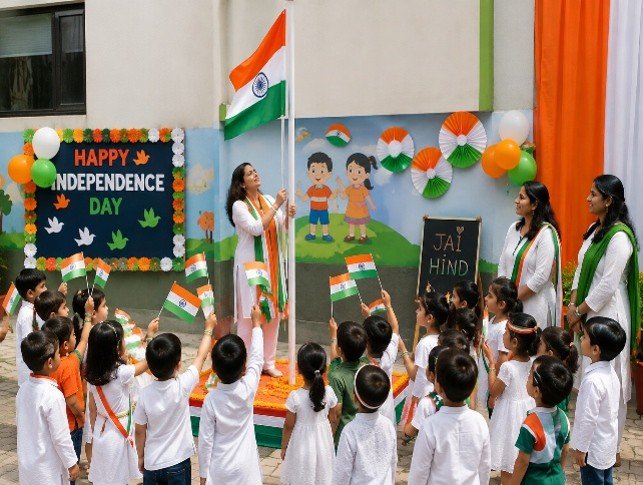
Gather children for a short and meaningful Flag Hoisting Ceremony to celebrate India’s Independence Day. Begin by inviting children to notice the Tiranga and identify its colours. The Preschool Centre Head or the Principal hoists the National Flag as children watch respectfully. Sing the National Anthem together, followed by a cheerful patriotic song. Children may wave small child-safe flags and say “Jai Hind!” together. Keep the ceremony brief, inclusive and engaging, helping children develop respect for the National Flag while experiencing the joy of celebrating together.
What Children Learn: Recognition of the National Flag, colour identification, respectful participation, following group instructions and a sense of belonging.
14. Patriotic Song and Dance – Celebrate with Joy
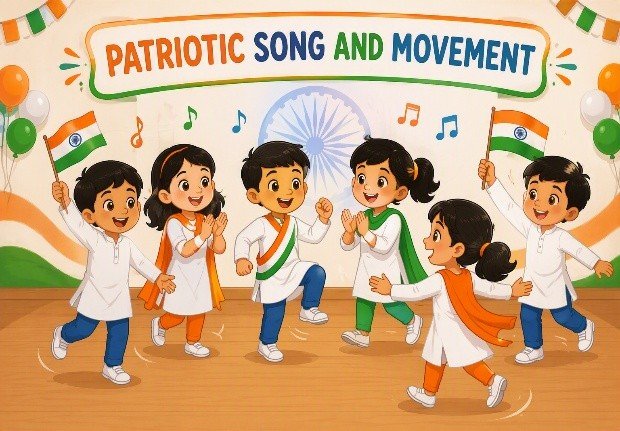
Play a simple, child-friendly patriotic song and invite children to sing along with easy actions and movements. Schools can select simple, rhythm-based patriotic songs suitable for the children’s age group. Demonstrate 3–4 movements such as waving hands like the flag, marching in place, clapping to the rhythm and moving in a circle. Begin practising the selected movements at least two weeks before the celebration.
What Children Learn: Rhythm, coordination, listening skills, confidence and group participation.
LY1–LY4 Guidelines: LY1–LY2 can clap, sway and wave; LY3 can follow simple movements; LY4 can follow a sequence and lead selected actions. Schools can decide the performance format and number of participating children according to class strength and children's comfort levels.
Song Link for reference: Tiranga | Independence Day special | Dancehood by Mehek | Small kids Dance
15. Plant for India – Green India Activity
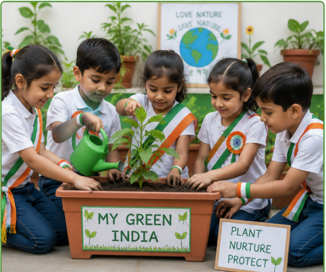
Children plant easy-to-grow seeds or saplings in pots labelled “My Green India.” Guide them to add soil, place the seed, water it gently and decorate the pot with tricolour elements. Each class can adopt a plant and take turns watering and observing its growth. Choose non-toxic, child-safe plants and avoid plants with thorns or irritating sap.
What Children Learn: Care, responsibility, teamwork, fine-motor skills, respect for nature and environmental awareness.
Tips for Planning an Independence Day Celebration in School
A successful Independence Day celebration in school does not have to be complicated. The key is to plan experiences that children can understand and enjoy.
- Choose age-appropriate activities: A two-year-old and a six-year-old should not be expected to participate in the same way. Keep instructions short and provide more movement and sensory experiences for younger children.
- Encourage every child to participate: Encourage every child to participate in a way that feels comfortable. Children may sing, dance, create, help a friend, hold a prop or simply observe before joining in.
- Balance fun with learning: Avoid turning the celebration into a series of speeches and competitions. Combine movement, music, storytelling, art, outdoor play and simple conversations.
- Use eco-friendly materials: Reuse cardboard, fabric scraps, newspaper, paper rolls, leaves and other safe materials for decorations and crafts.
- Teach respect for the National Flag: If the National Flag is used, ensure that teachers and children handle and display it respectfully and follow the applicable Flag Code guidance. The Ministry of Home Affairs provides official guidance for schools and other institutions. Reference: National Flag Emblem Anthem | Ministry of Home Affairs.
- Appreciate effort, not performance: A child who takes three steps on stage for the first time deserves just as much appreciation as a child who performs an entire dance.
Conclusion
For preschool children, Independence Day is an opportunity to learn through joyful participation. When children sing together, create a Tricolour craft, listen to stories of freedom fighters, work in teams and care for nature, they build memories alongside important social and developmental skills.
Let this Independence Day be a celebration where every child has an opportunity to participate, explore and experience the joy of being part of the Birla Open Minds preschool community.
