
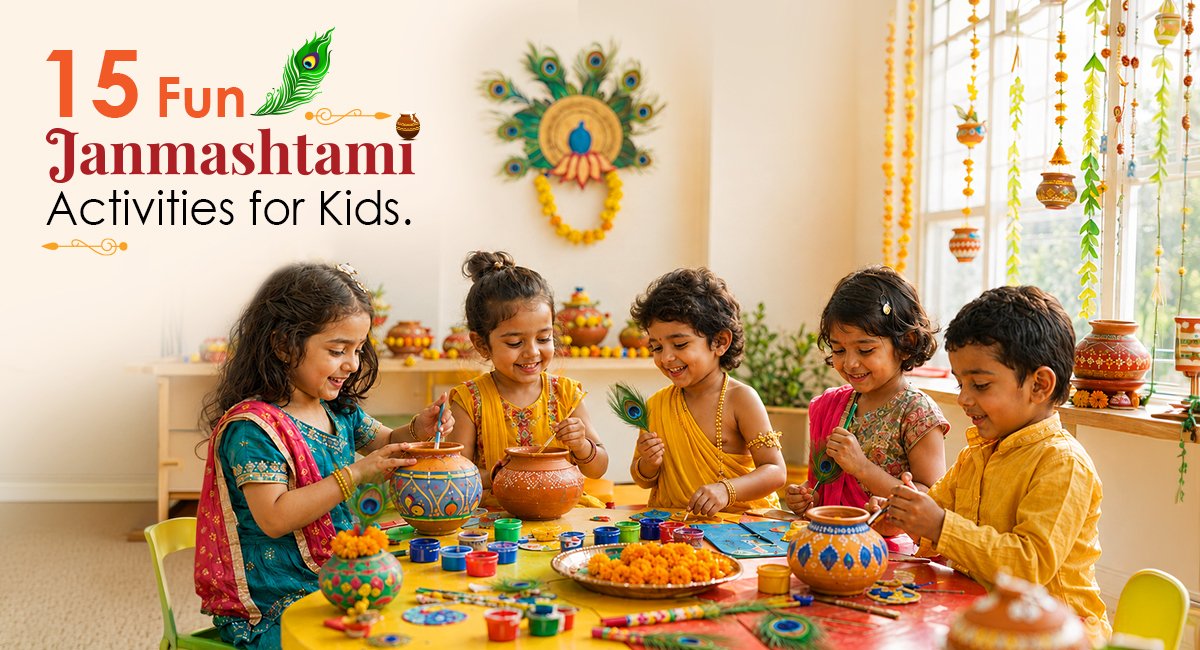
15 Fun Janmashtami Activities for Kids
What’s more exciting than dressing up as little Krishna, decorating a colourful matki and dancing to a Krishna song? A whole day filled with all three! Janmashtami is a wonderful festival for children because it brings together stories, music, colours, crafts and play.
Parents and teachers can turn the celebration into a memorable experience with simple activities that children can enjoy while learning about Lord Krishna and the traditions associated with Janmashtami. From making peacock feathers and Krishna crowns to playing a matki treasure hunt, these Janmashtami activities for kids are easy, creative and full of fun. They are especially suitable as Janmashtami activities for preschoolers, helping little learners build confidence, creativity and teamwork as they celebrate.
Why Celebrate Janmashtami with Activities for Kids?
Young children learn through experiences. Festival activities help them in engaging with traditions while enhancing language, focus, self-assurance, teamwork, and fine motor abilities. The goal is participation, not perfection!
15 Fun Janmashtami Activities for Kids
These Krishna activities for kids can be organised at home or in a preschool classroom with familiar, child-safe materials.
1. Krishna Dress-Up Activity
Let children come dressed as Krishna or Radha, or create a simple dress-up corner with paper crowns, peacock-feather headbands and colourful scarves. Once everyone is ready, have a little Krishna parade or let the children act out a short story. It’s a fun way for them to join in the celebration, use their imagination and feel confident.
What Children Learn: Builds imagination, confidence, self-expression, and social interaction through role-play.
2. Matki Decoration Activity
Give children small paper or clay matkis to decorate with washable paints, colourful ribbons and stickers. Encourage them to experiment with different colours and patterns rather than follow a fixed design. Once finished, display their decorated matkis around the classroom as part of the Janmashtami celebration.
What Children Learn: Fine motor skills, color exploration, creativity, and hand-eye coordination.
3. DIY Peacock Feather Craft
Prepare large paper feather outlines and provide coloured paper, crayons or washable paints. Younger children can paste paper pieces, while older children can draw the central pattern. This develops hand-eye coordination and colour awareness.
What Children Learn: Hand-eye coordination, color awareness, and scissor/pasting control.
4. Janmashtami Storytelling Session
Tell a short story about Krishna's birth or childhood using picture cards, puppets or a matki as a prop. Ask simple questions along the way and focus on values such as kindness, courage and friendship. Storytelling supports listening and vocabulary.
What Children Learn: Active listening, vocabulary enhancement, empathy, and moral values.
5. Dahi Handi-Themed Game
Instead of climbing or making a human pyramid, give small teams lightweight cups to stack and place a paper matki on top. Children can take turns building the tower. This safe Dahi Handi activity develops patience and teamwork.
What Children Learn: Patience, strategic thinking, balance, and cooperative teamwork.
6. Krishna Flute Craft
Children can decorate a paper roll or sturdy paper flute with crayons, dots and stripes. Use the finished flutes as pretend props for a song or story. Avoid beads and other small loose parts with younger children.
What Children Learn: Fine motor dexterity, spatial pattern recognition, and dramatic play skills.
7. Janmashtami Colouring Activity
Give children simple Janmashtami-themed colouring sheets featuring Krishna, a flute, matki, a cow or a peacock feather. Provide chunky crayons for younger children and let them choose their own colours. Colouring helps develop concentration, pencil control and creativity.
What Children Learn: Concentration, grip strength, pencil control, and artistic freedom.
8. Krishna-Themed Dance Activity
Play a suitable bhajan or folk-inspired song and start with simple movements such as clapping, swaying and turning. Children can then invent their own movements. Keep participation voluntary and focus on enjoyment.
What Children Learn: Gross motor rhythm, physical coordination, body control, and joyful expression.
9. Janmashtami Bhajan or Rhymes
Choose a short Krishna rhyme or bhajan with repeated words and simple actions. Teach it one line at a time and add claps or gestures. Group singing supports memory, rhythm, pronunciation and confidence.
What Children Learn: Auditory memory, rhythm, pronunciation, and confidence in group participation.
10. Matki and Krishna Treasure Hunt
Hide pictures of Krishna-themed objects such as matkis, flutes and peacock feathers around the classroom. Give children simple hints to help them find each picture. Once they find one, they can name the object and continue looking for the others. This fun activity encourages observation, listening and participation.
What Children Learn: Visual observation, listening skills, problem-solving, and active participation.
11. Make a Krishna Crown
Give each child a simple paper crown to decorate with crayons, coloured paper and a paper peacock feather. Once the crowns are ready, children can wear them during the Janmashtami celebration, a song or a dress-up activity.
What Children Learn: Fine motor skills, craft assembly, and pride in wearable art creation.
12. Janmashtami Quiz for Kids
Show children pictures of Krishna, a flute, a matki, a peacock feather and other familiar festival symbols. Ask simple questions such as, “Which one is Krishna’s flute?” or “Can you find the matki?” Let children answer together or point to the right picture, keeping the activity fun and informal.
What Children Learn: Visual recognition, cognitive recall, turn-taking, and confidence.
13. Butter-Themed Sensory Activity
Add a little white, non-toxic paint to a zip-lock bag and seal it well. Tape the bag to a table and let children gently press, squish or draw on it with their fingers. It is a simple, mess-free activity inspired by Krishna’s love for butter.
What Children Learn: Tactile sensory development, fine motor tracing, and mess-free creative exploration.
14. Krishna-Themed Art Activity
Give children paper, crayons and washable paints and let them draw or paint Krishna, cows, flutes, matkis or a Vrindavan-inspired scene. Encourage them to create their own pictures rather than copy a model. This gives children a chance to use their imagination and express their ideas.
What Children Learn: Creative freedom, imagination, concept expression, and motor control.
15. Janmashtami Group Craft
Create a large Janmashtami display together as a class. Give each child a small section to decorate with a drawing, handprint, paper flower or colourful pattern, and then put all the pieces together to create one festive mural. It is a simple way to make every child feel involved while encouraging creativity and teamwork.
What Children Learn: Teamwork, collaborative art, community belonging, and shared pride.
Janmashtami Celebration Ideas in School
Good Janmashtami celebration ideas in school can combine several short activities rather than one long programme. Start with storytelling, move to craft stations, add a song or dance and finish with a safe group game. A classroom exhibition can unite the celebration and provide each child with an opportunity to engage.
Tips for Making Janmashtami Activities Age-Appropriate
For preschoolers, pre-cut difficult shapes, use child-friendly materials and keep the activities short. Janmashtami activities for kindergarten children can include simple clues, two-step instructions and small group responsibilities. Use non-toxic supplies, monitor children closely and steer clear of fire, glass, sharp tools, and activities involving height.
Final Thoughts
Janmashtami activities for kids can transform a cultural celebration into a fun educational opportunity and learning experience. Through easy preparation, parents and educators can utilize stories, crafts, music, and games to enhance creativity, confidence, collaboration, and cultural understanding.
