
10 Ways Schools Can Celebrate International Day of the Girl Child
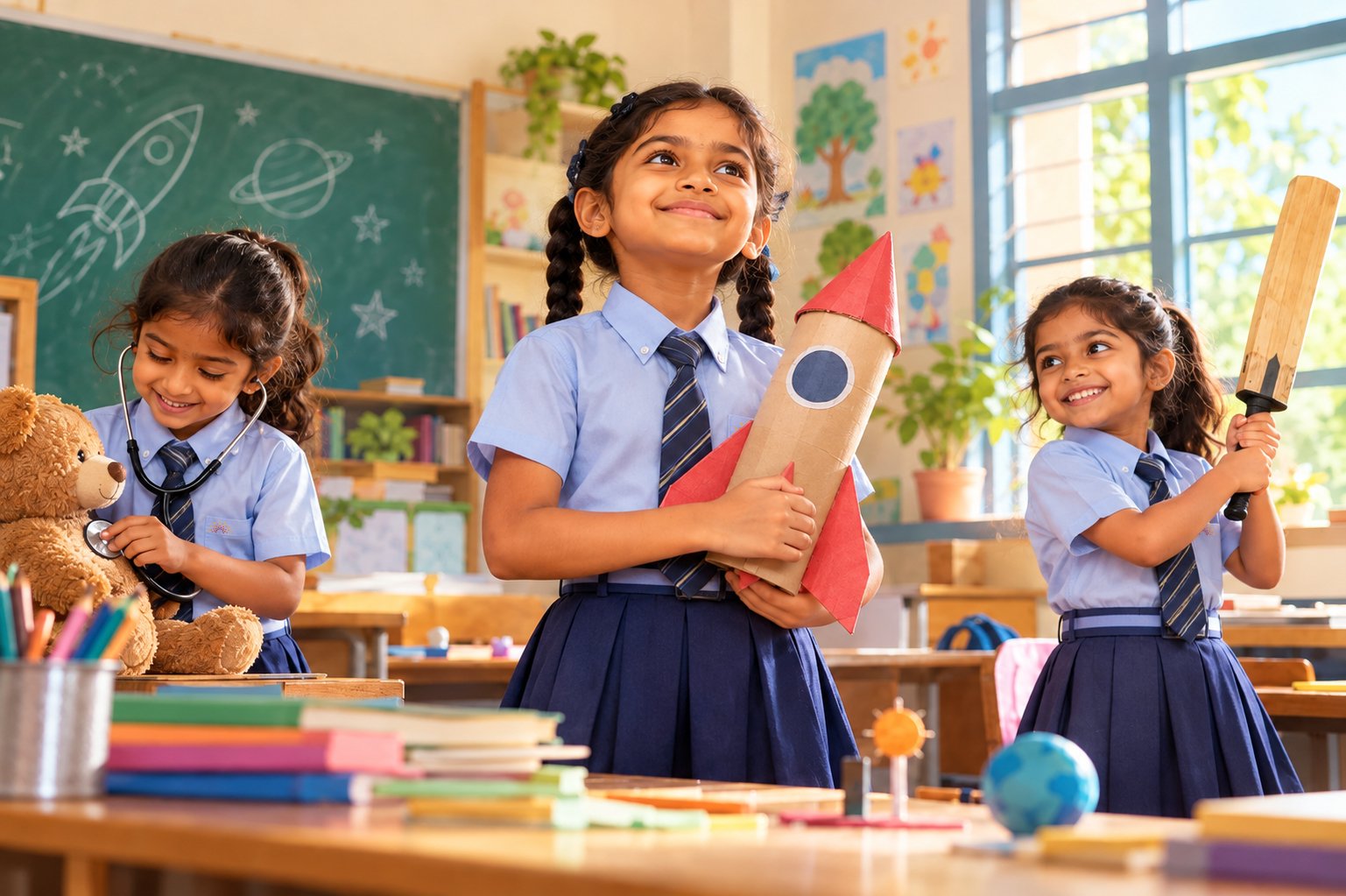
Ask a five-year-old girl what she wants to be when she grows up, and the answers come fast: an astronaut, a doctor, a cricketer.
But children learn from more than textbooks. They notice who gets picked first, who gets the lead role, and which jobs stories always give to boys. Some girls start to hear “this isn’t for you” without anyone saying it.
That’s what International Day of the Girl Child, observed on 11 October, is really about. A girl’s confidence is shaped early, and the classroom is one of the first places we can protect it. Here are ten International Day of the Girl Child activities for preschool and primary learners.
Why Is International Day of the Girl Child Important?
Because what children believe about themselves at six often follows them at sixteen. A girl who is told her ideas matter keeps sharing them. A girl quietly steered away from building, sports or leading may stop trying before she finds her strengths.
Girls’ education sits at the heart of this. A girl who keeps learning gains more choices about her work, health and future, and her family and community benefit too. For schools, the day asks: does every learner get an equal chance to try, speak and lead?
10 International Day of the Girl Child Activities for Schools
Pick two or three of these activities for girl child celebrations that suit your learners.
1. Start with an I Can Wall
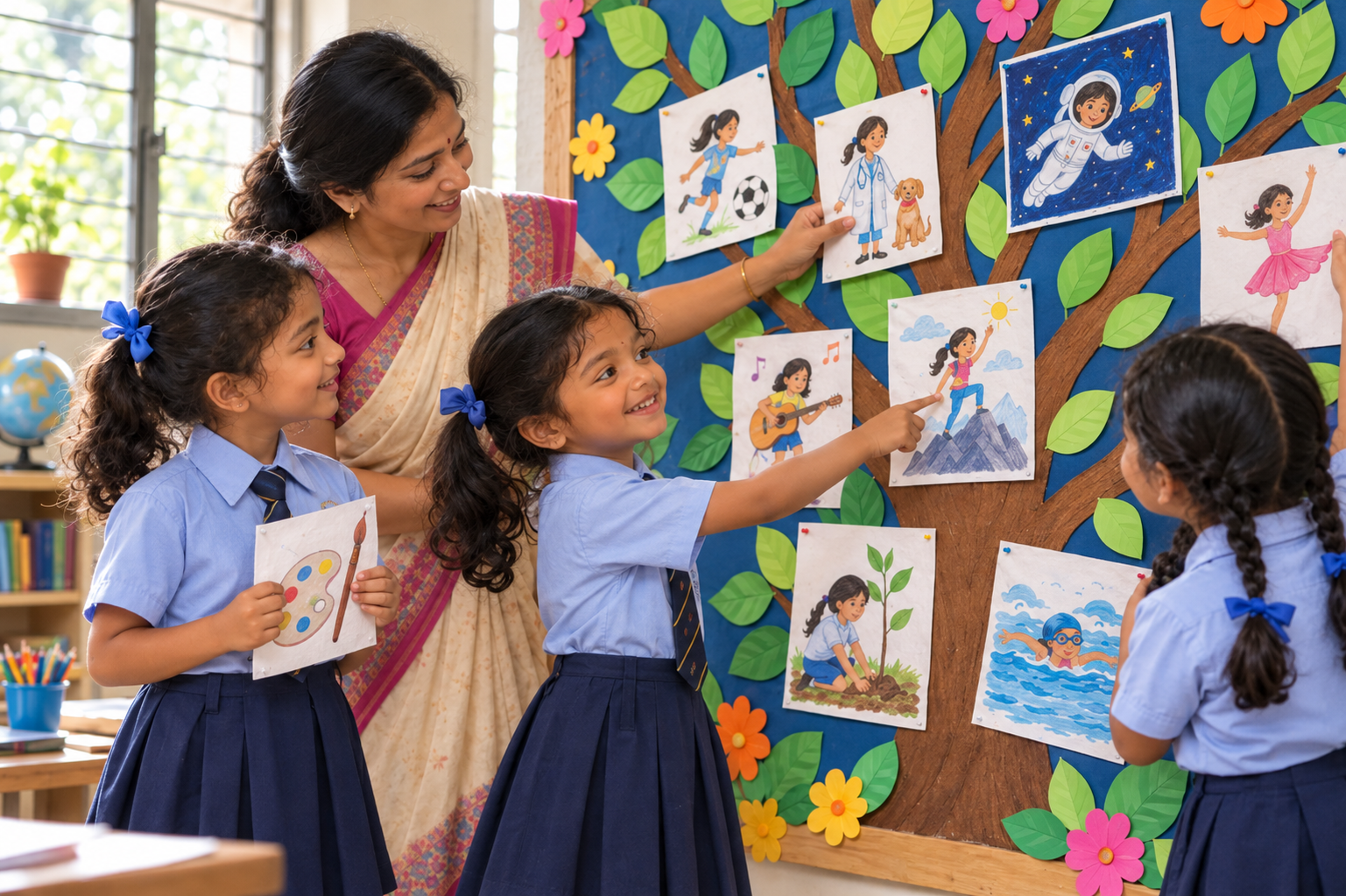
Ask each girl: What is something you feel proud of doing? She draws or writes it on a card; preschoolers can tell you while you write. Add a second card: something I would like to learn next.
What they gain: confidence and pride.
2. Open a Book and a Conversation
Choose a story with a girl at the centre and pause to ask: What will she do next? What would you try in her place? Preschoolers can act out a moment; primary learners can write a new ending. Try these:
- Mae Among the Stars by Roda Ahmed (ages 3 to 7): a girl who dreams of space.
- Binti Knows Her Mind by Richa Jha (early grades, free on StoryWeaver): a girl-led story by an Indian author.
- Malala’s Magic Pencil by Malala Yousafzai (ages 5+, read together): every girl’s right to school.
What they gain: imagination and belonging.
3. Let Dreams Take Over a Corner
Set up a corner with blocks, books, art supplies and props for different jobs, plus balls and skipping ropes so active play feels welcome. Here’s why physical activities are essential for child development. Then ask: What would you like to try today?
What they gain: freedom to explore.
4. Meet an Inspiring Woman from Your Community
Invite a local gardener, nurse or sportsperson for a short chat. Help learners ask: What did you have to learn? What do you do when something is hard?
What they gain: role models and perseverance.
5. Ask: Is That Fair?
Use two puppets to act out a scene where a girl is told she can’t join the football game. Pause and ask: Is that fair? How could we change it? Replay it using the children’s ideas.
What they gain: a sense of fairness.
6. Give Girls Room to Build and Experiment
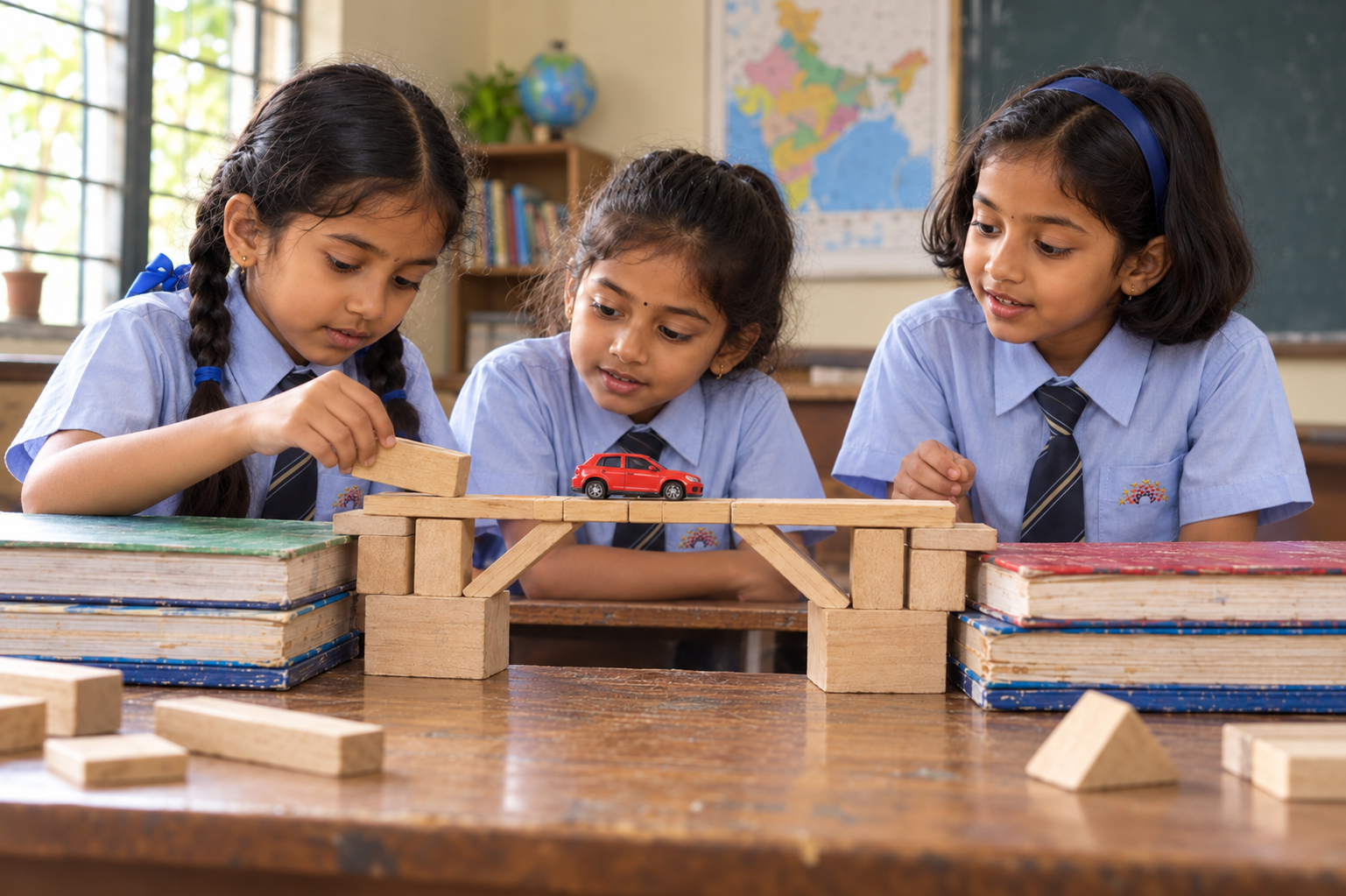
Challenge small groups to build a bridge that holds a toy. Rotate roles so every girl builds, tests and explains, and praise attempts, not just results. It’s one of many creative activities that boost preschoolers’ brain development.
What they gain: teamwork and courage.
7. Pass the Microphone and Listen
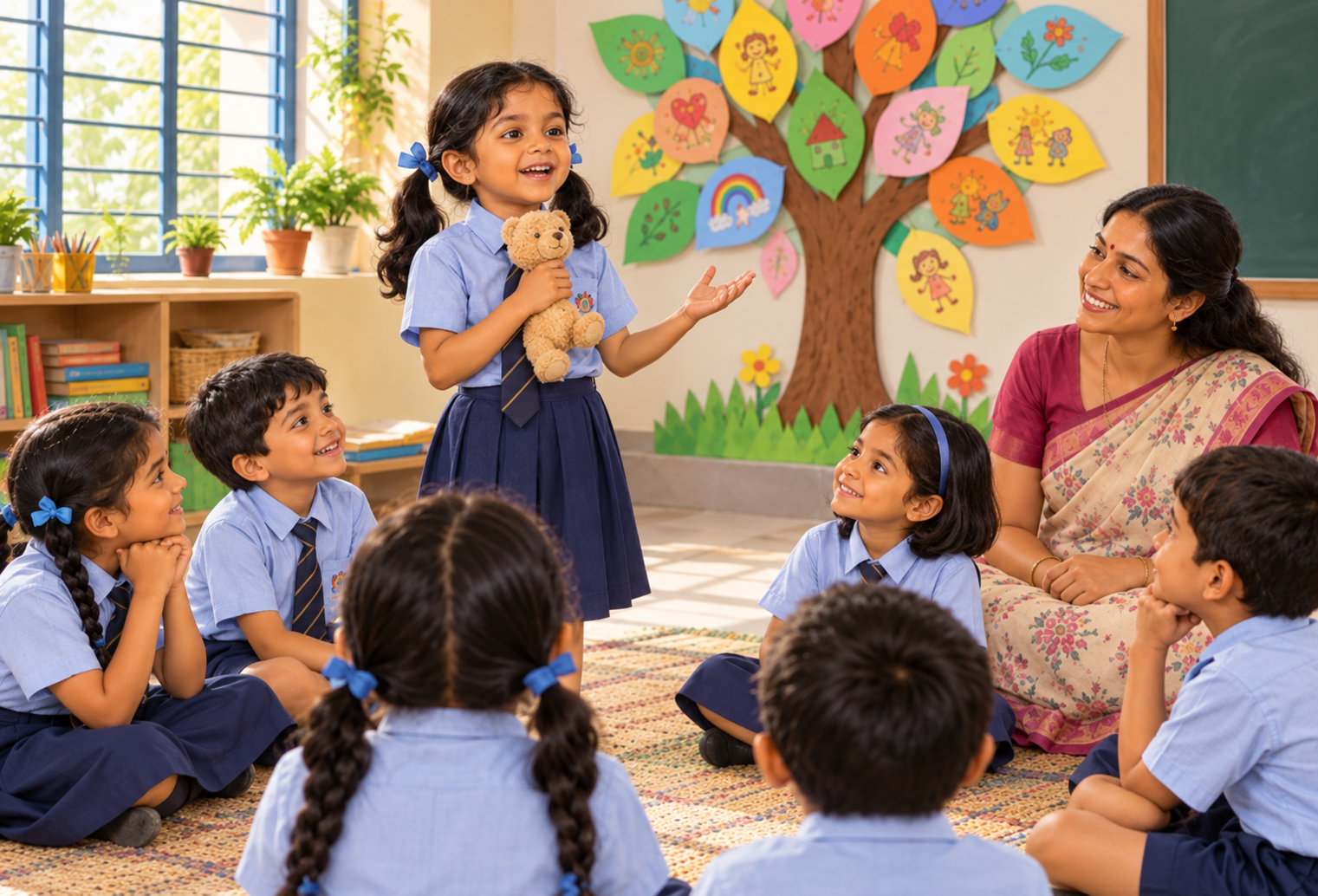
Pass a soft toy around as a microphone and invite girls to share something they enjoy at school or one thing they’d change. Then act on one suggestion and tell the class you did.
What they gain: a voice.
8. Grow an Appreciation Tree
We tend to praise results and forget effort. Give learners paper leaves to record something a girl did well, like kept trying or helped a friend. Add them to a tree.
What they gain: recognition and kindness.
9. Take the Conversation Home
Send families a prompt: What is something you would love to learn, and how can I help? Choose one small step together. It’s an easy girl child day activity for parents.
What they gain: curiosity valued at home.
10. Make a Promise You Can Keep
Ask the class: What can we do so girls feel included and heard here? Choose a few clear actions, like inviting others into games and sharing turns to lead. Put them on a poster and revisit it next week.
What they gain: shared responsibility.
Make It More Than One Day
Choose two or three activities, then carry the ideas into everyday school life. Include every child, keep girls’ opportunities in focus, and make it more than a one-day event.
Conclusion
International Day of the Girl Child helps schools create space for girls to learn, lead and express themselves. Aim for a classroom where every child is encouraged to learn and chase her aspirations. A meaningful celebration begins with one question and grows through what we do with the answer.
