
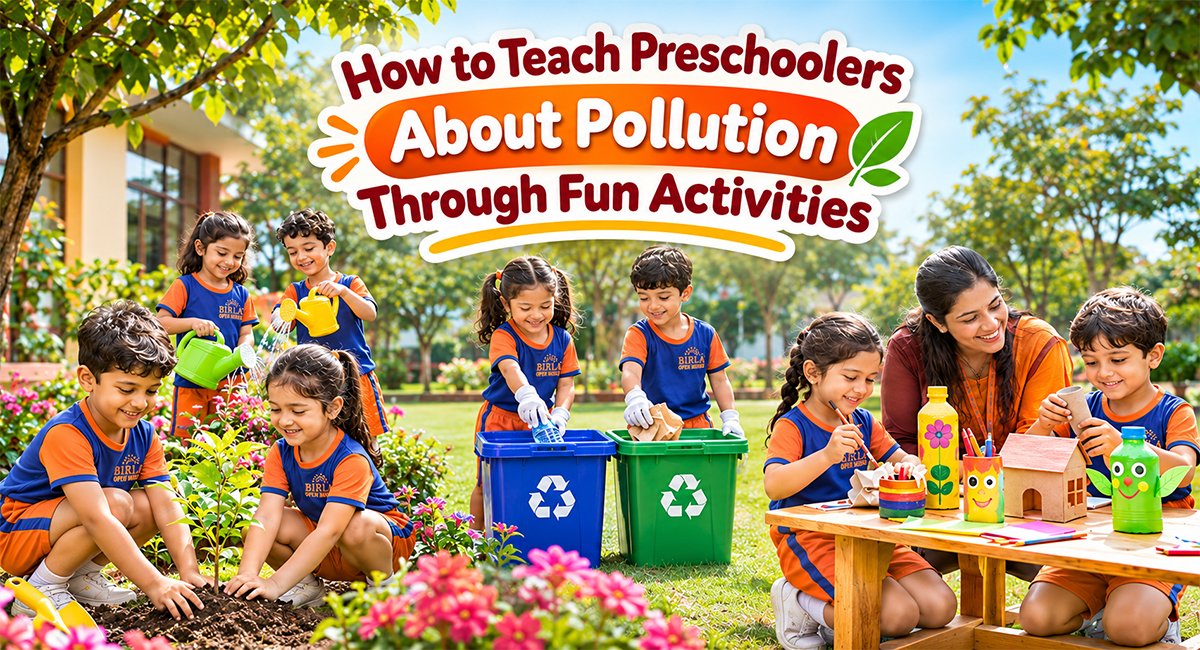
How to Teach Preschoolers About Pollution Through Fun Activities
National Pollution Control Day, observed in India on 2nd December, highlights the importance of preventing pollution and protecting our environment. It offers a meaningful opportunity to introduce preschoolers to pollution through simple, engaging activities that help them understand how to keep their surroundings clean and care for our planet. This blog will guide you through fun and interactive activities to help preschoolers understand pollution and develop simple eco-friendly habits from an early age.
Why Is It Important to Teach Preschoolers About Pollution?
The preschool years are an important time to develop habits and values. Simple lessons about caring for the Earth help children understand that their everyday actions affect people, plants, animals and shared spaces.
Pollution-related learning helps preschoolers to:
- Understand how actions such as littering and wasting water affect the environment.
- Practise responsible habits, such as using dustbins, saving water and reusing materials.
- Show care for plants and animals by recognising their need for clean air, water and safe spaces.
- Feel connected to the Earth through stories, nature exploration and creative activities.
How to Explain Pollution to Preschoolers in Simple Words
To understand how to teach kids about pollution, connect the idea to familiar experiences, such as a smoky sky, a littered playground or rubbish floating in a pond. Explain it in simple words:
“Pollution takes place when unwanted things make our air, water, or land dirty and unsafe for people, plants, and animals.”
Introduce the three types of pollution through pictures, familiar examples and short discussions.
What Is Air Pollution?
Air pollution happens when smoke and dust make the air dirty. Smoke from vehicles, crackers and burning waste can affect the air we breathe.
Show children pictures of a clean park and a smoky or dusty environment.
What Is Water Pollution?
Water pollution happens when rubbish or other unwanted substances make water dirty and can harm fish and other water animals.
Compare pictures of a clean river with pictures of a water body filled with rubbish.
What Is Land Pollution?
Land pollution happens when waste is left on the ground, making places such as parks and playgrounds dirty and unsafe for plants and animals.
Compare pictures of a clean playground with pictures of littered surroundings.
8 Fun Pollution Activities for Preschoolers
These eight playful activities help preschoolers explore pollution and practise simple ways to care for the environment.
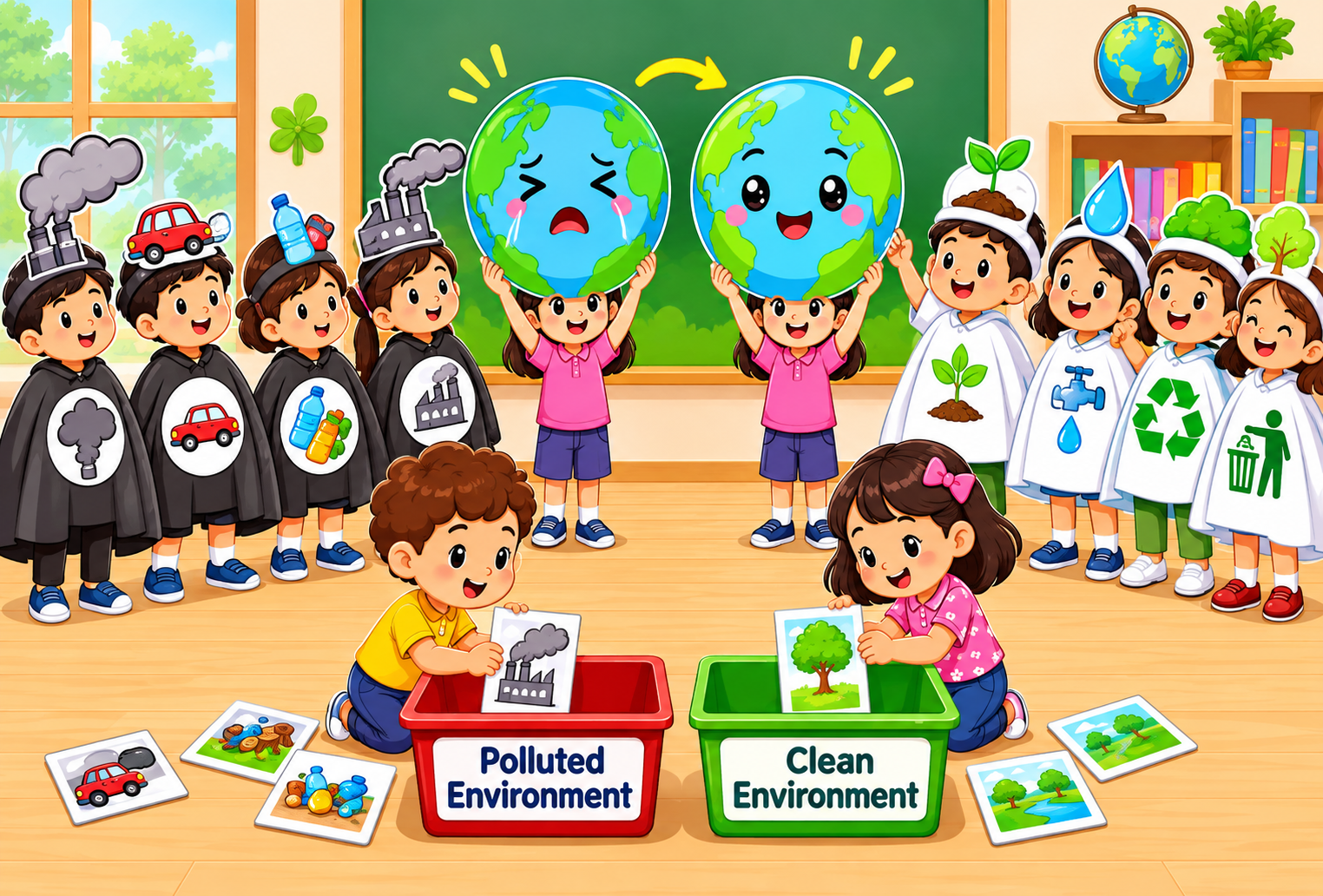
1. Clean and Polluted Environment Skit: Save Our Earth – From Sad to Happy
Resources Required: Earth poster (sad and happy Earth), lightweight black and white capes, pollutant name cards, pollution prevention placards, picture cards, and two sorting trays labelled “Clean” and “Polluted”.
How to Conduct the Activity?
- Begin with a child holding a sad Earth poster. Invite children wearing black capes labelled with pollutants such as Smoke, Dust, Plastic Waste and Garbage to enter.
- The sad Earth says, “Oh no! Our Earth is getting polluted. Please help me!”
- Invite children wearing white capes with solutions like Plant Trees, Save Water and Reduce Plastic. Encourage them to shout, “Stop Pollution!” and “Save Our Earth!” as the pollutant groups move aside.
- The Earth child turns the poster to reveal a happy Earth. Everyone says, “A Happy Earth, A Healthy Earth!”
- Conclude with a picture-sorting activity using trays labelled “Clean Environment” and “Polluted Environment”.
Teacher’s Note: Older children can deliver simple dialogues, while younger children can participate through actions, gestures, and holding placards.
2. Classroom Clean-Up Challenge
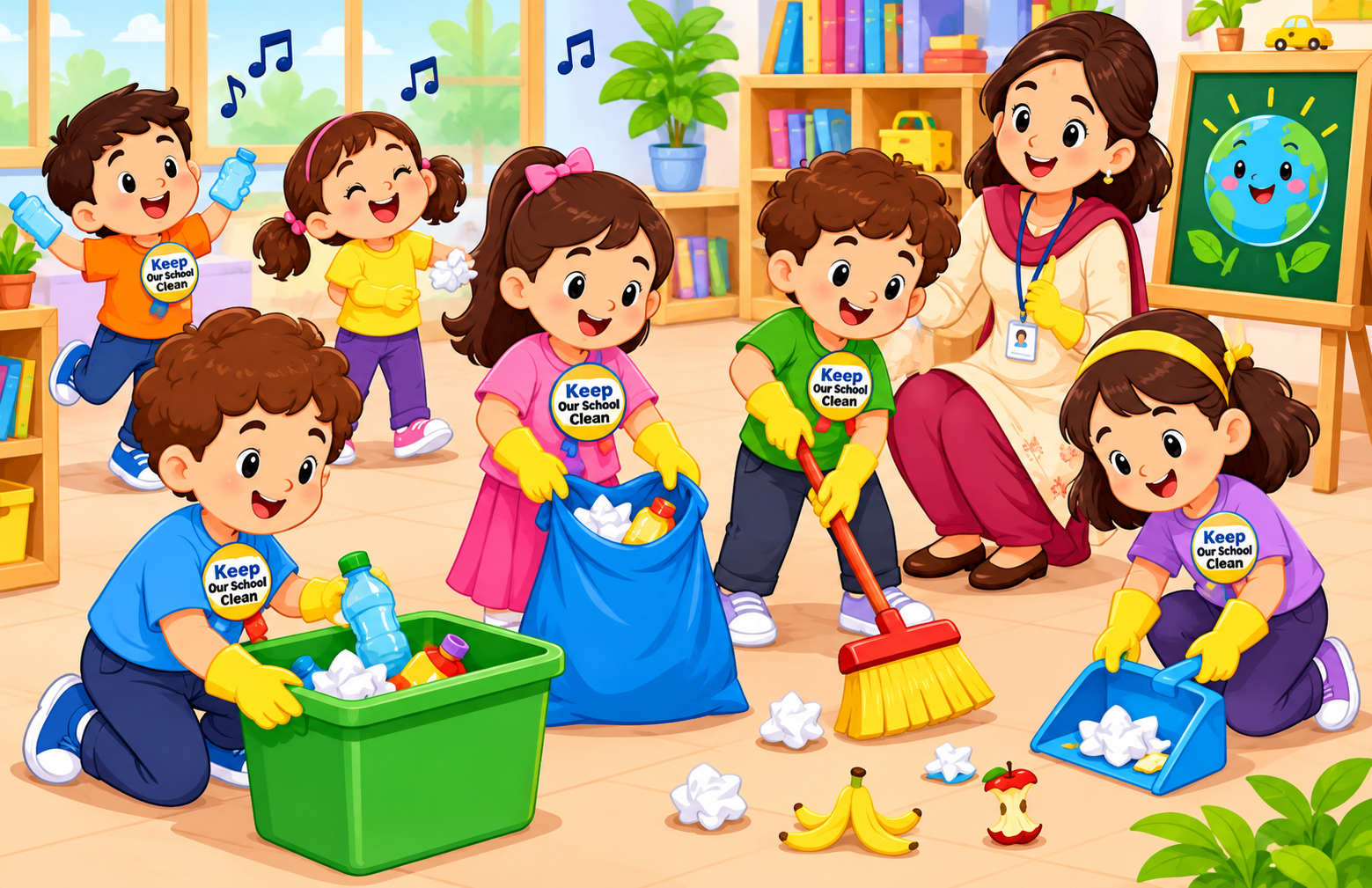
Resources Required: Child-safe gloves, small brooms, collection bags, clean paper scraps, plastic wrappers, fruit peels, food leftovers and Clean-Up Champion badges.
How to Conduct the Activity?
- Begin with a fun “Clean-Up Dance”. Invite children to wear child-safe gloves and follow simple movements such as clapping, turning and twisting to an upbeat song.
- Encourage children to work together to collect the waste materials placed around the classroom. Older children can use small brooms and dustpans, while younger children can pick up larger, safe waste items with adult guidance.
- Appreciate their efforts and encourage them to wash their hands thoroughly after the activity.
Fun Twist: Award each child a “Clean-Up Champion” badge to celebrate their efforts in keeping the classroom clean.
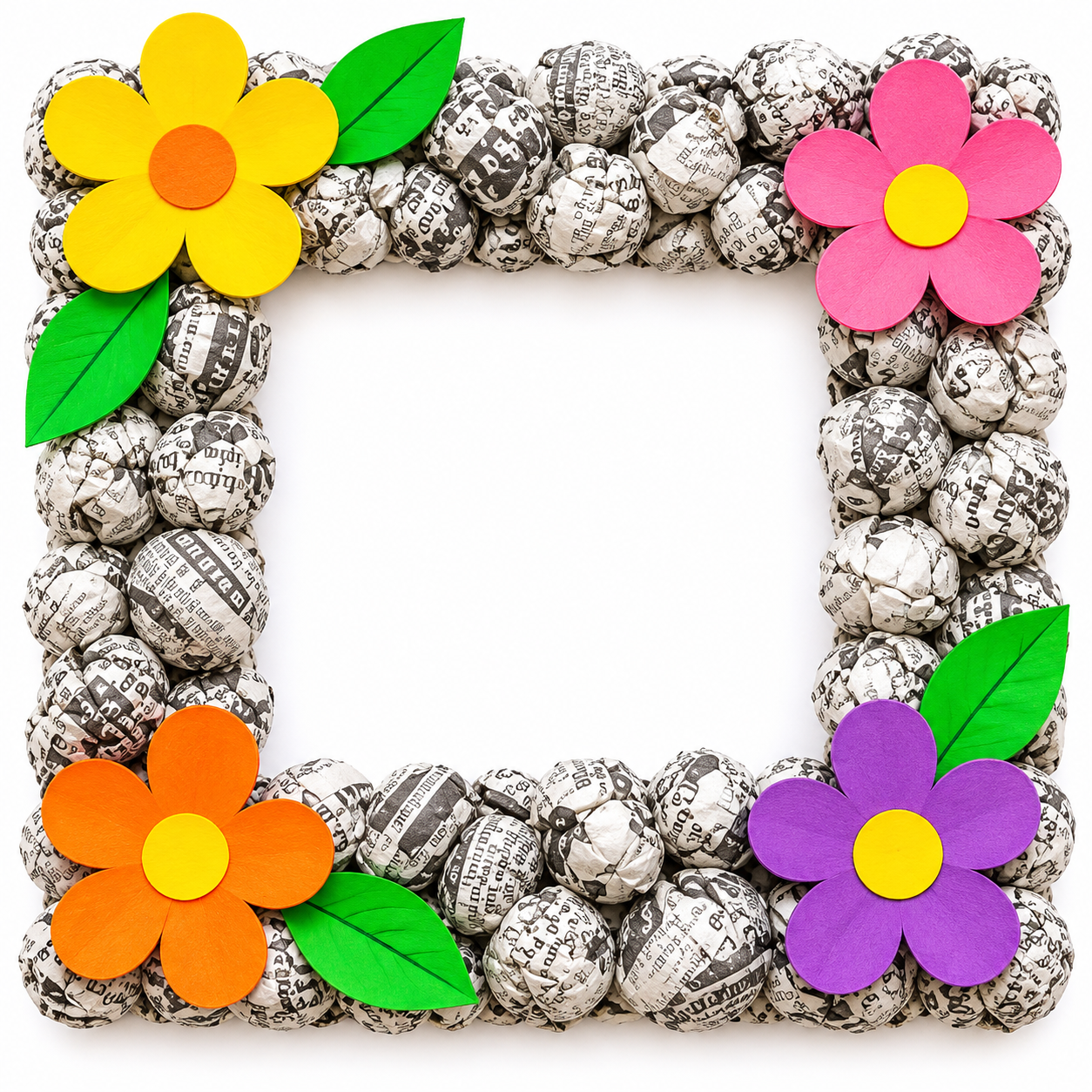
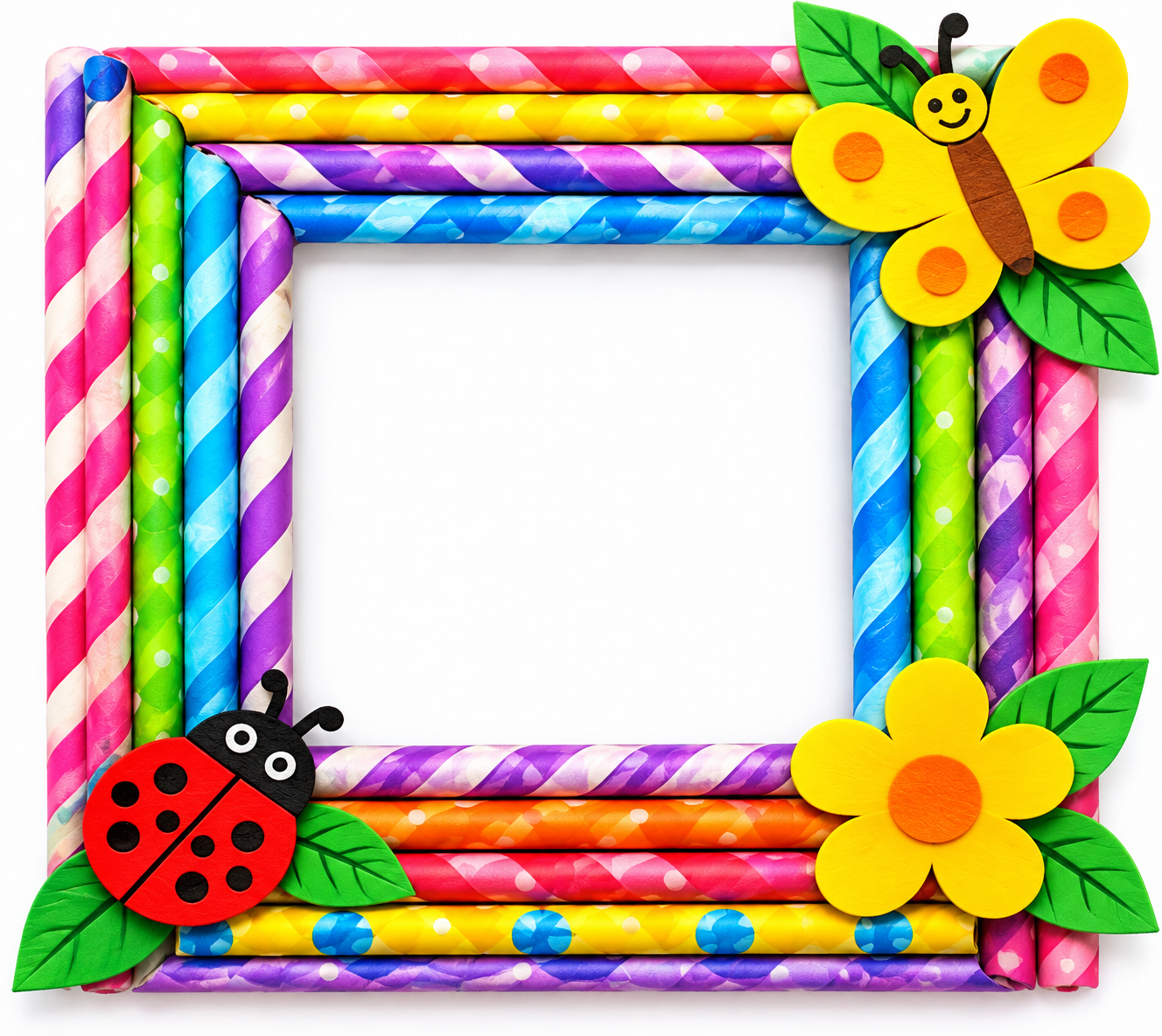
3. DIY Recycling Craft Activity: My Newspaper Photo Frame
Resources Required: White cardboard photo frame cut-outs, old newspapers, child-safe glue, child-friendly scissors and photographs.
How to Conduct the Activity?
- Show children a photo frame made from recycled newspaper. Provide each child with a white cardboard frame cut-out and newspaper pieces.
- Encourage children to tear and crumple the newspaper into small balls. Guide them to dip the balls in glue and stick them onto the cardboard frame with adult assistance.
- Allow the frames to dry, display them in the classroom and let children take them home.
For Older Children: Encourage children to roll newspapers into long strips, colour and stick them onto the frame. Guide them to trim the extra newspaper using child-safe scissors.
4. Water Pollution Experiment
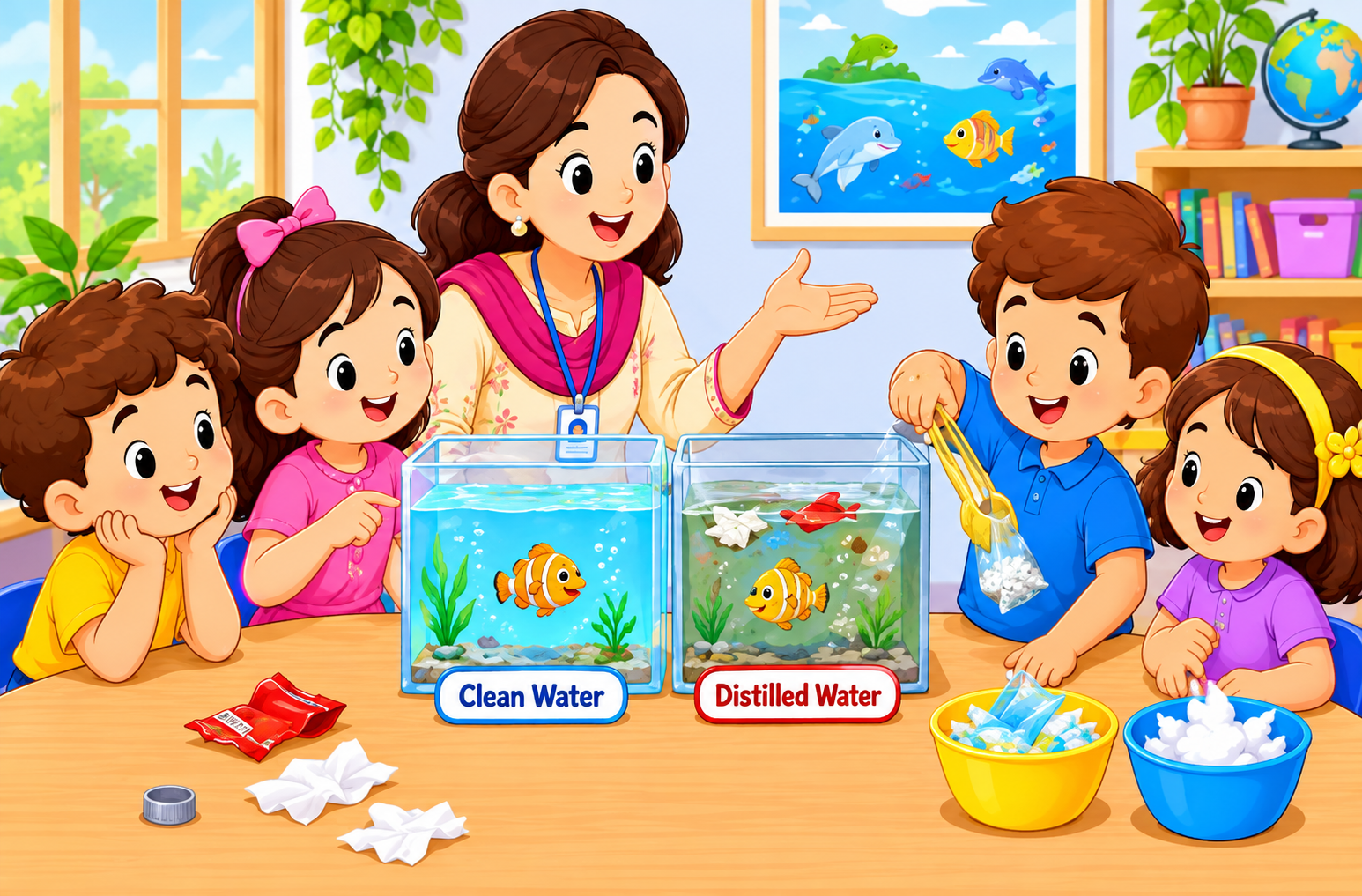
Resources: Two transparent containers filled with clean water, toy fish, clean paper pieces, small metal objects, clean plastic wrappers, child-safe tongs, and two bowls.
How to Conduct the Activity?
- Fill two transparent containers with clean water and place a toy fish in each. Label one “Clean Water”.
- Add clean paper pieces and plastic wrappers to the second container and label it “Polluted Water”.
- Invite children to observe both containers. Ask, “Which water looks cleaner?” and “Would fish like to live in water filled with rubbish?”
- Explain how waste pollutes water and harms aquatic animals.
- Let children use child-safe tongs to remove the waste and place it in the bowls.
Safety Note: Do not allow children to taste or drink the water. Use clean materials and supervise them throughout.
5. Clean Air, Polluted Air – Roll the Dice and Play!
Resources Required: A large picture dice featuring six images: planting trees, riding a bicycle, walking, vehicle smoke, factory smoke and burning garbage.
How to Play:
- Mark two areas as “Clean Air” and “Air Pollution”. Explain that some actions keep the air clean, while others cause pollution.
- Invite children to roll the picture dice and identify the picture.
- Ask all children to move to the appropriate area based on the picture.
- Encourage the child who rolled the dice to demonstrate the action through gestures, such as planting a tree or saying “Stop Pollution!”
- Continue until everyone gets a turn. Conclude by discussing simple ways to keep the air clean.
Teacher’s Note: Use simple picture cues and guidance for younger children. Encourage older children to identify the pictures and explain their choices.

6. Waste Segregation Game: Little Clean-Up Heroes!
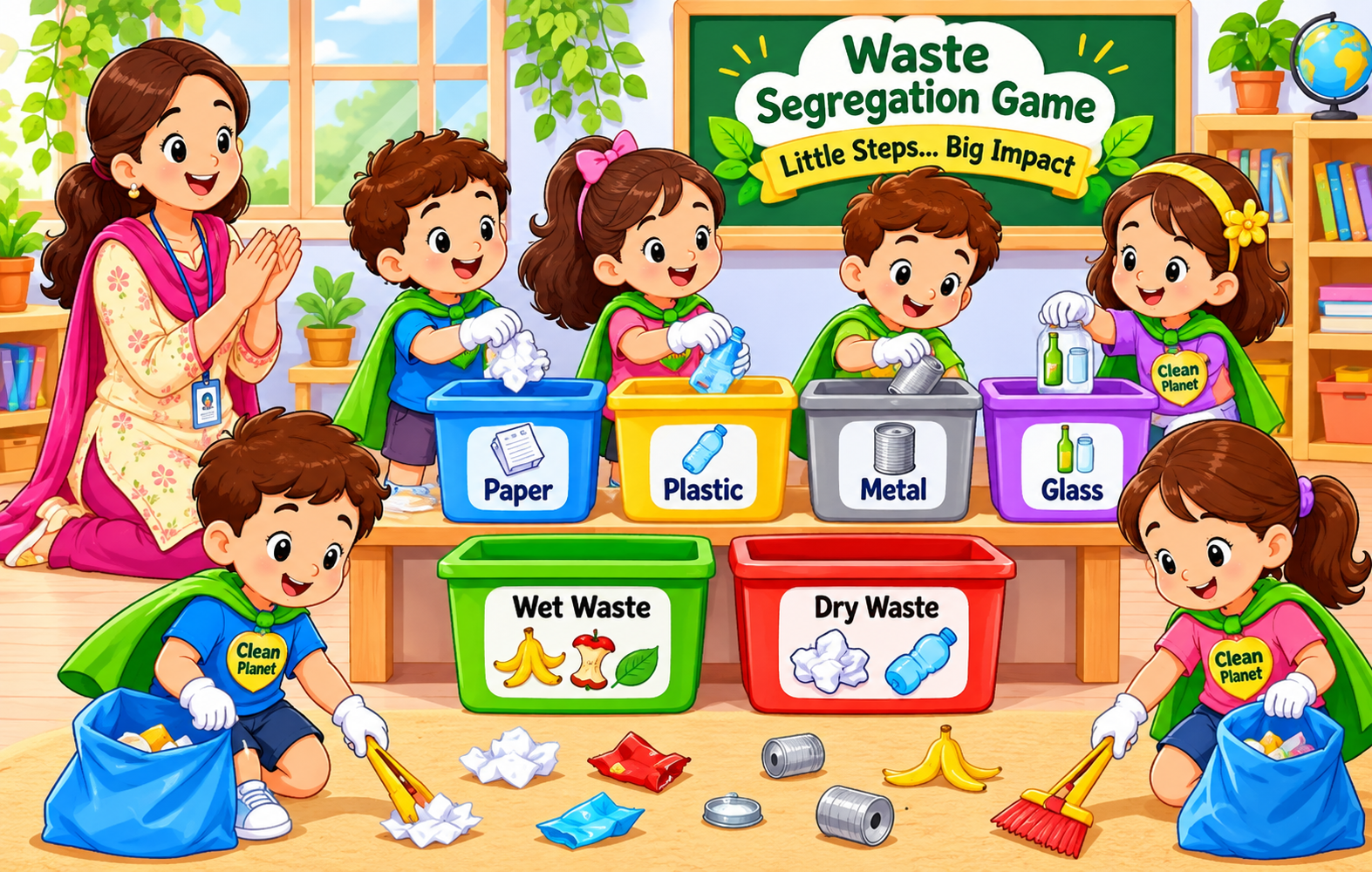
Resources Required: Clean paper pieces, plastic wrappers, safe metal objects, glass picture cards, child-safe tongs, and four labelled containers (Paper, Plastic, Metal, and Glass).
How to Conduct the Activity?
- Create a pretend messy classroom using clean paper pieces, plastic wrappers and safe metal objects. Use picture cards for glass waste.
- Divide children into groups and introduce them as “Little Clean-Up Heroes”.
- Set up labelled containers for Paper, Plastic, Metal, Glass, Dry Waste and Wet Waste. Begin with Dry and Wet Waste for younger children and gradually introduce the other categories for older children. Use picture cards instead of actual glass.
- Demonstrate waste sorting. Let each group collect the waste and bring it to the sorting station.
- Help children sort the items by asking simple questions. Celebrate their efforts once the clean-up is complete.
7. Save Water and Protect Nature – Every Drop Counts!
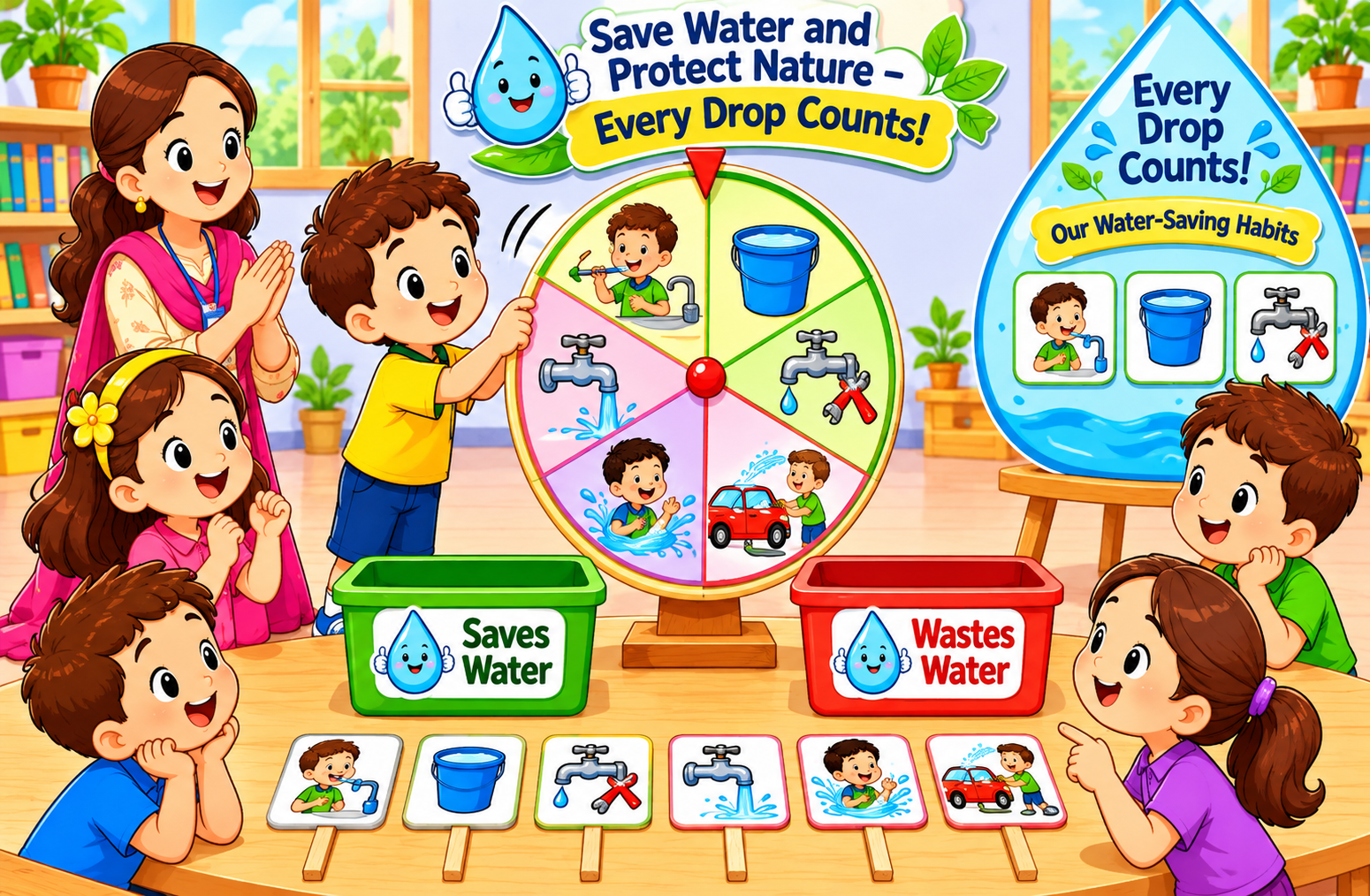
Resources Required: A picture wheel featuring six simple situations (three water-saving habits and three water-wasting habits), six matching picture cards mounted on ice-cream sticks, and two labelled boxes (Saves Water and Wastes Water).
How to Conduct the Activity?
- Show children a picture wheel featuring water-saving and water-wasting habits.
- Let children spin the wheel, identify the picture and sort the matching card into “Saves Water” or “Wastes Water” boxes.
- Encourage them to demonstrate actions such as turning off a tap or filling a bucket.
- Create an “Every Drop Counts!” chart with pictures of water-saving habits.
Teacher’s Note: For younger children, use four simple pictures and provide guidance. For older children, use all six pictures and encourage them to explain their choices.
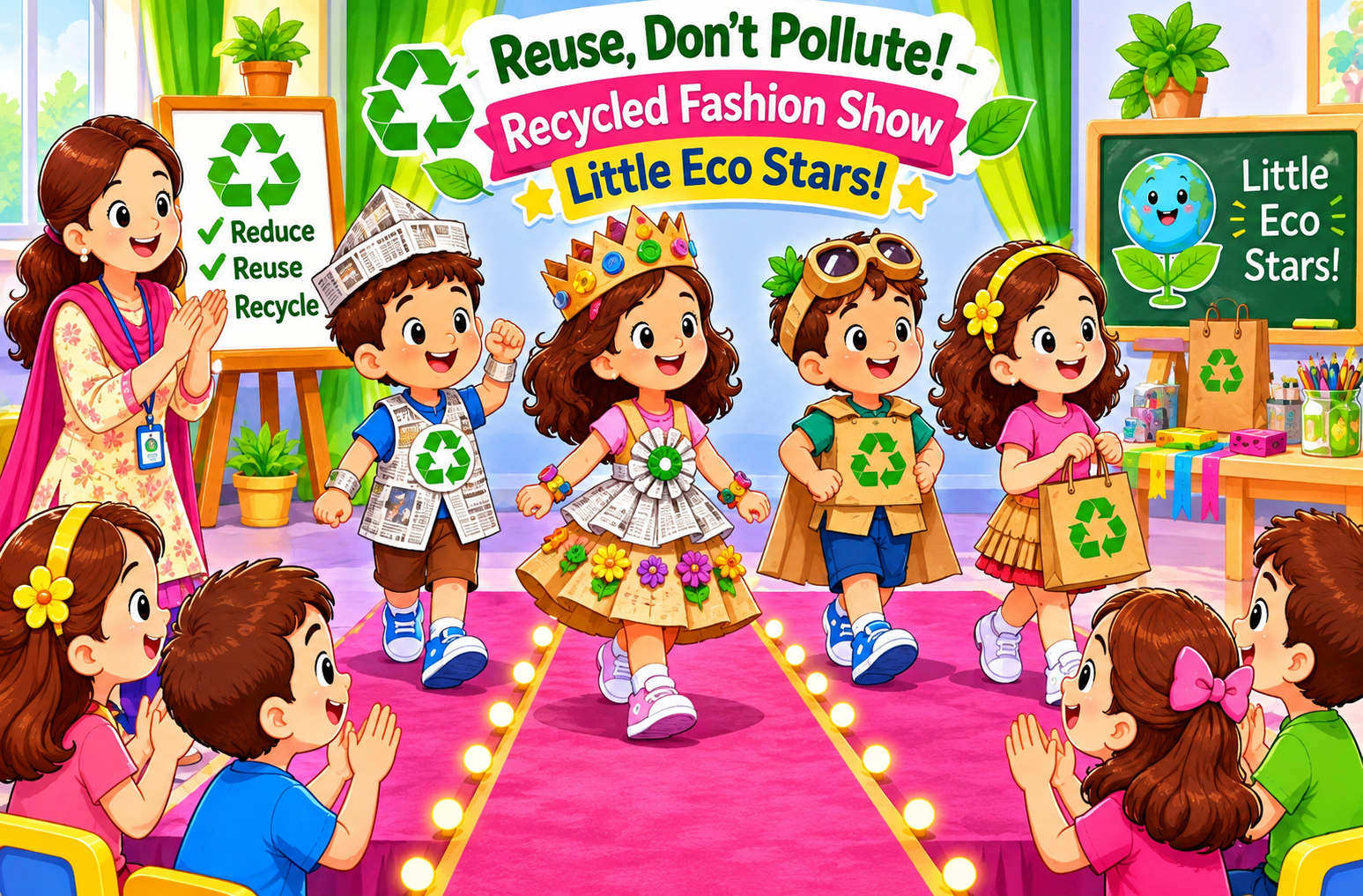
8. Reuse, Don't Pollute! – Recycled Fashion Show: Little Eco Stars!
Resources Required: Old newspapers, cardboard, paper bags, clean fabric scraps, reusable ribbons, paper caps, child-safe craft materials and music.
How to Conduct the Activity:
- Show children accessories made from reusable materials, such as newspaper hats and paper crowns.
- Let children decorate pre-prepared accessories using child-safe craft materials.
- Organise a mini fashion show. Older children can describe their creations, while younger children can walk the runway and wave.
- Appreciate their efforts with fun titles like Newspaper Star and Little Green Hero.
Teacher’s Safety Note: Use clean, lightweight materials. Avoid plastic bags, staples, sharp edges and choking or entanglement hazards. Ensure all accessories are comfortable and safe to wear.
Everyday Habits That Help Preschoolers Reduce Pollution
Children can help reduce pollution through simple daily habits:
- Use Dustbins: Put wrappers and paper scraps in the appropriate bins.
- Reuse Materials: Use both sides of paper and reuse craft materials.
- Choose Reusable Items: Use reusable bottles and lunch containers.
- Save Electricity and Water: Switch off unused lights and fans and turn off taps after use, with adult guidance.
- Care for Plants: Water plants gently and avoid damaging them.
- Reduce Single-Use Plastic: Choose reusable alternatives.
Tips for Teaching Environmental Awareness to Preschoolers
Make environmental learning simple and engaging:
- Use familiar words and everyday examples.
- Teach through games, songs, stories and hands-on activities.
- Keep activities short and engaging.
- Encourage children to ask questions and observe their surroundings.
- Focus on simple, positive actions.
- Reinforce good habits through daily routines.
How Schools Can Build Environmental Awareness Among Preschoolers
Schools can promote environmental awareness through everyday activities:
- Classroom Recycling Corners: Set up labelled baskets for sorting clean waste.
- Plant-Care Routines: Involve children in watering and observing plants.
- Nature Walks: Encourage children to observe trees, flowers and birds.
- Environmental Story Sessions: Read stories about cleanliness and caring for nature.
- Themed Celebration Days: Celebrate Earth Day and National Pollution Control Day through simple activities.
- Classroom Responsibilities: Involve children in keeping their learning spaces clean and organised.
Conclusion
Teaching children how to care for the environment can begin with small, everyday actions. Through these environmental activities for preschoolers, children can learn to reduce waste, save water, reuse materials and care for nature.
